Promoting Civic Discourse in Public Libraries: Lessons Learned from ULC's 2025-2026 Initiative

Written by Kelsey Hughes, Program Manager, Urban Libraries Council
In a world with increasing partisan division and civic disconnect, libraries serve as vital community gathering places where residents can meet across difference and find commonality. Libraries have always served as these third spaces – free, accessible locales for spending time that are neither home nor work. However, in a rapidly changing and often charged culture, library staff need new skills for fostering rich community engagement, bridging divides, and lifting otherwise unheard or marginalized voices in vital conversations.
That’s where Urban Libraries Council’s partnership with Everyday Democracy came in. In 2025, Everyday Democracy and ULC received a grant from the American Arbitration Association’s International Centre for Dispute Resolution to train 50 library staff across 12 libraries in the United States and Canada on the techniques of multipartial facilitation. Multipartial facilitation is an approach in which the facilitator, rather than staying strictly neutral, actively supports the diverse participants and perspectives in the room. This means working to ensure that everyone in the room, especially those whose voices are often left out, can take part fully and be heard.
After the training, libraries each received $1,000 to facilitate at least one conversation program in their community. Libraries selected their conversation topic based on their community’s needs and interests and received coaching support from Everyday Democracy and ULC. From December 2025 to July 2026, participant libraries facilitated 32 programs reaching a total of 674 attendees. Topics included youth workforce development, urban renewal, food justice, gender, race, housing, AI, education, civil liberties, and more. Along the way, we learned a lot about the value and impact of these conversations, and how libraries can continue to be bridges.
Lessons Learned
Communities are hungry for connection
I was able to attend the session at the Anne Arundel County, Maryland, Public Library, a screening and discussion of the documentary Ain’t No Back to a Merry-Go-Round about a group of young Black Howard University students who worked with a suburban community of mostly Jewish mothers to desegregate a Montgomery County, MD amusement park in 1960. Organizers told me the registration filled up and they had to increase event capacity. Participants who were there expressed deep appreciation to the library for facilitating the event and several asked when the next one would be.
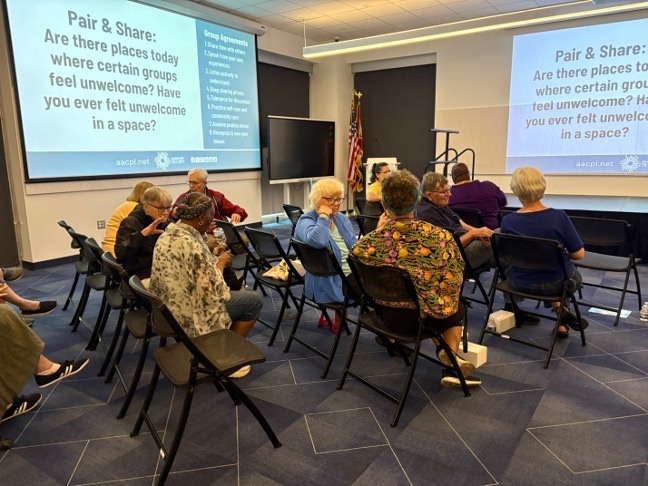
Photo courtesy of Anne Arundel County Public Library
In Toronto, Ontario, library staff facilitated a conversation around harm reduction approaches related to drug addiction. The conversation was spurred by a recent change in legislation that shut down several supervised consumption sites and led to confusion in the community. The conversation was hard, but important, as many shared their own experiences navigating harm reduction services. Lots of people cried, and everyone was encouraged to take space when they needed to. At one point, library staff gently took over for a partner facilitator so that person could take a moment to recover after sharing their own experience. Afterward, participants who did not have personal experience with these services expressed increased empathy and an ongoing interest in learning.
At the Ferguson Library in Stamford, Connecticut, staff hosted a series of programs around literacy of all types in the community. Facilitators used exit tickets as a way to gather feedback from participants and created an opportunity for people to reflect on the experience in writing. After an intergenerational literacy presentation and conversation, one participant shared: “I want to thank you for your time and determination! I left the room and cried because I've been praying for something like this for myself and my child. I hope we do more of these conversations; this was so meaningful.”
The responses are a powerful reminder that the impact of these conversations can extend well beyond the information exchanged during the event. For some participants, simply having a meaningful opportunity to connect, be heard, and engage with others around an issue that matters to them can be deeply significant.
Multipartial facilitation moves libraries beyond neutrality
Central to the multipartial facilitation approach is the ability for the facilitator to pay attention to who is speaking and who is not, how power and participation are distributed, and what might be needed to create a more equitable and productive dialogue. This can include asking questions that surface assumptions, introducing perspectives that may not otherwise be represented, rebalancing power in the room, grounding the conversation in facts and first-hand narratives, and disrupting harmful narratives when necessary.
Libraries have long considered themselves neutral arbiters, mere providers of information rather than active participants in community conversation. Engaging in a multipartial (rather than impartial) approach forced library staff to challenge that assumption. In a post-training survey, one of the library staff participants shared, “Through this training I have noted a number of times I might have stepped in, corrected misinformation or brought up underrepresented narratives to create a deeper understanding. As a new librarian, I was not willing to take that much control, but I see now ... that I had much more agency than I realized.”
The Salt Lake City Public Library offers one example of what this shift can look like in practice. A library staff member applied the multipartial facilitation practices to an ongoing book club series examining contemporary social and political issues. The facilitator incorporated group agreements, questions to elicit new perspectives, and used co-facilitation as a way to model shared power. In one conversation, participants explored questions about ethnicity and identity, including whether it is appropriate to ask someone “Where are you from?” Participants had very different perspectives on what felt acceptable and what did not. Rather than trying to arrive at one “right” answer, the multipartial approach created space for those differences to be explored. The conversation helped participants better understand why the same question or interaction might feel very different to different people. By creating space for disagreement and helping participants listen to one another, the facilitator was able to create an opportunity for greater understanding.
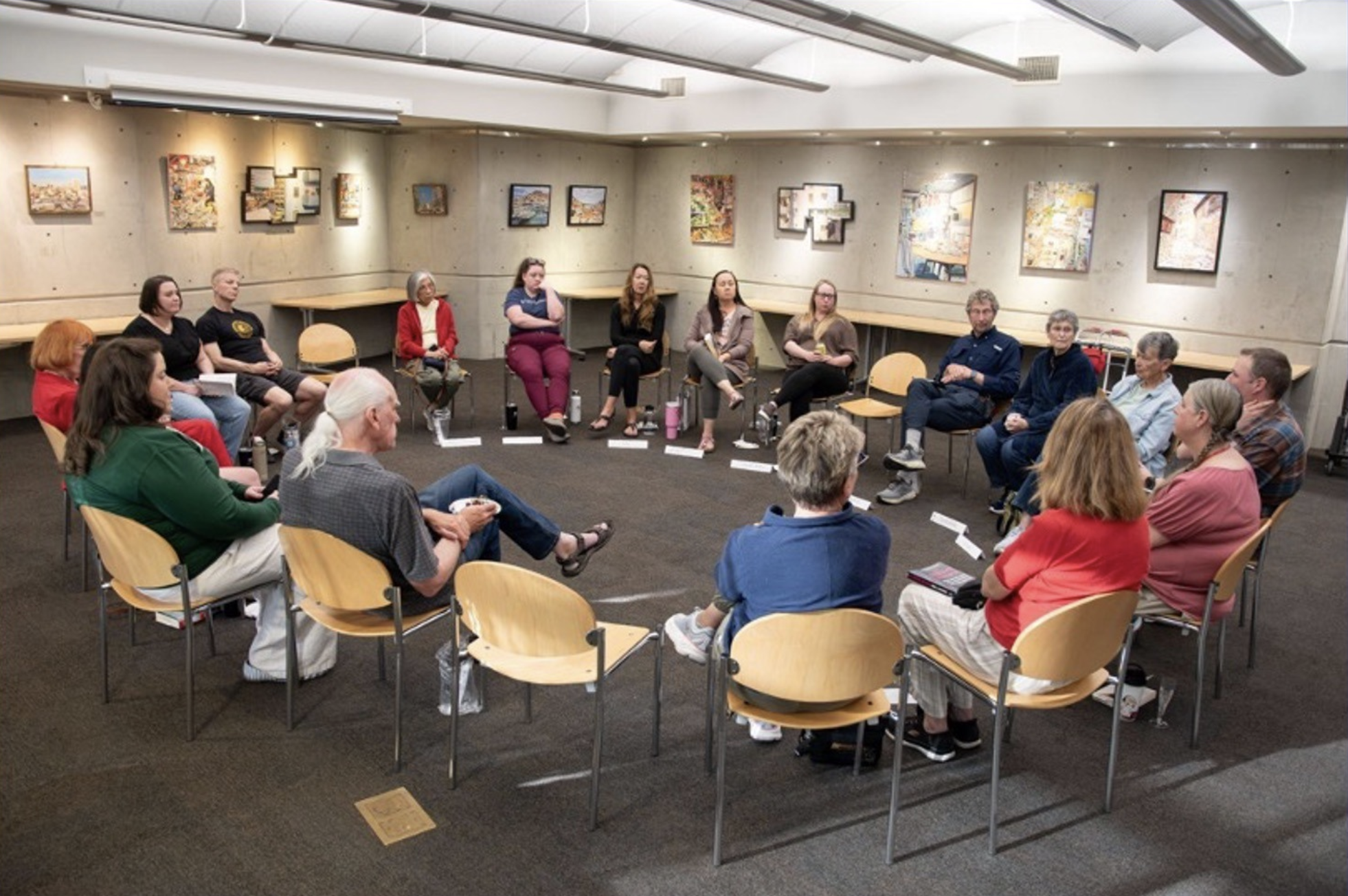
Photo courtesy of the Salt Lake City Public Library
Preparedness is essential
During coaching sessions and whole-group cohort calls, library staff frequently expressed stress about the possibility of having to interrupt harmful comments, and concern about doing so without derailing the entire conversation. Given the current climate and the potentially sensitive or difficult nature of some topics to be discussed, they assumed they would need to intervene and worried about things getting out of hand. Some in the training had already experienced fraught conversations or active disruption in programs in the past.
Despite the concern, overall, participants reported anecdotally that their events were overwhelmingly productive, with no significant incidents. One reason may be that libraries were able to take time to thoughtfully prepare and design the conversation to ensure a collaborative environment, with expert coaching from Everyday Democracy’s staff. From the beginning of the program, participants established and enforced meaningful community agreements to ensure productive dialogue. They considered how to arrange the space and the flow of the event to create a feeling of community and shared space. They were also able to pull from Everyday Democracy’s pocket facilitation guide, which provided helpful language and techniques for all sorts of potentially tricky moments. By putting in significant care and intention ahead of time, participants were able to plan for success.
One particularly helpful technique was gathering reliable information ahead of time, anticipating common misconceptions they may need to redirect or debunk and preparing resources to help ensure everyone was drawing from shared facts. At Topeka and Shawnee County, Kansas, Public Library facilitators hosted a dialogue between landlords, renters, and related advocates and experts about safe and healthy housing. Early on, it became clear that there were assumptions on all sides about what renters and landlords knew or were responsible for, but that no one shared the same assumptions. Because facilitators helped to surface those misconceptions and supplemented with facts, participants began to realize that there was no one “common sense” understanding and that expectations on both sides needed to be communicated and clarified. Though participants were at times frustrated, and the conversation did occasionally become adversarial, progress was made, and library staff have already seen some impacts within the community. Taking the time in advance to thoughtfully structure the program and have information and tools ready was a key part of the program’s success.
Step outside the library physically
One useful technique for bringing new perspectives and voices into the conversation was to take the program outside the library walls to co-create the conversations with community. In Austin, Texas, library staff were invited to facilitate a conversation at a local church. Though it was outside of the library's typical comfort zone, it provided an opportunity to expand the library’s engagement and also helped the church members in attendance reflect on the ways they touched the community and fostered relationships.
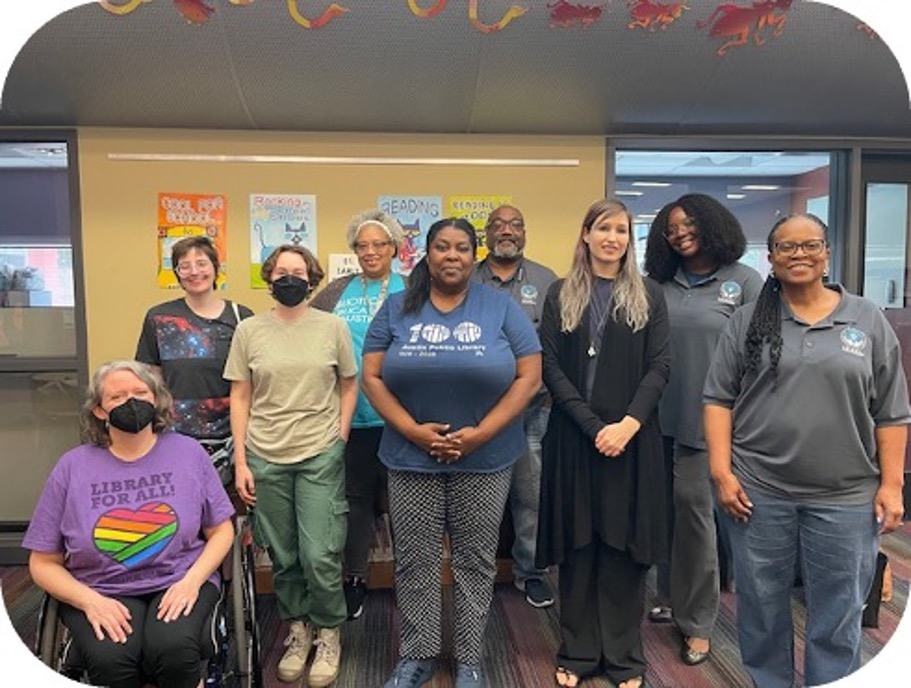 Photo courtesy of the Austin Public Library
Another key part of the equation involved partners who became trusted messengers, helping grant the library access to communities they would otherwise not have access to. At Ferguson Library, staff partnered with an apartment complex and parenting center, which helped ensure that vital voices were a central part of the conversation.
In San Diego, program facilitators worked with partners from the city Black Arts and Culture District both to find a more accessible space and identify a co-facilitator with lived experience, leading to a program with deeper, more meaningful, connective conversations about the city’s painful shared history of gentrification and housing inequality. Reflecting afterward, one program facilitator shared, “It was unlike any program I’d ever done. I was unprepared for the connection I’d have and the shared responsibility that I’d feel.”
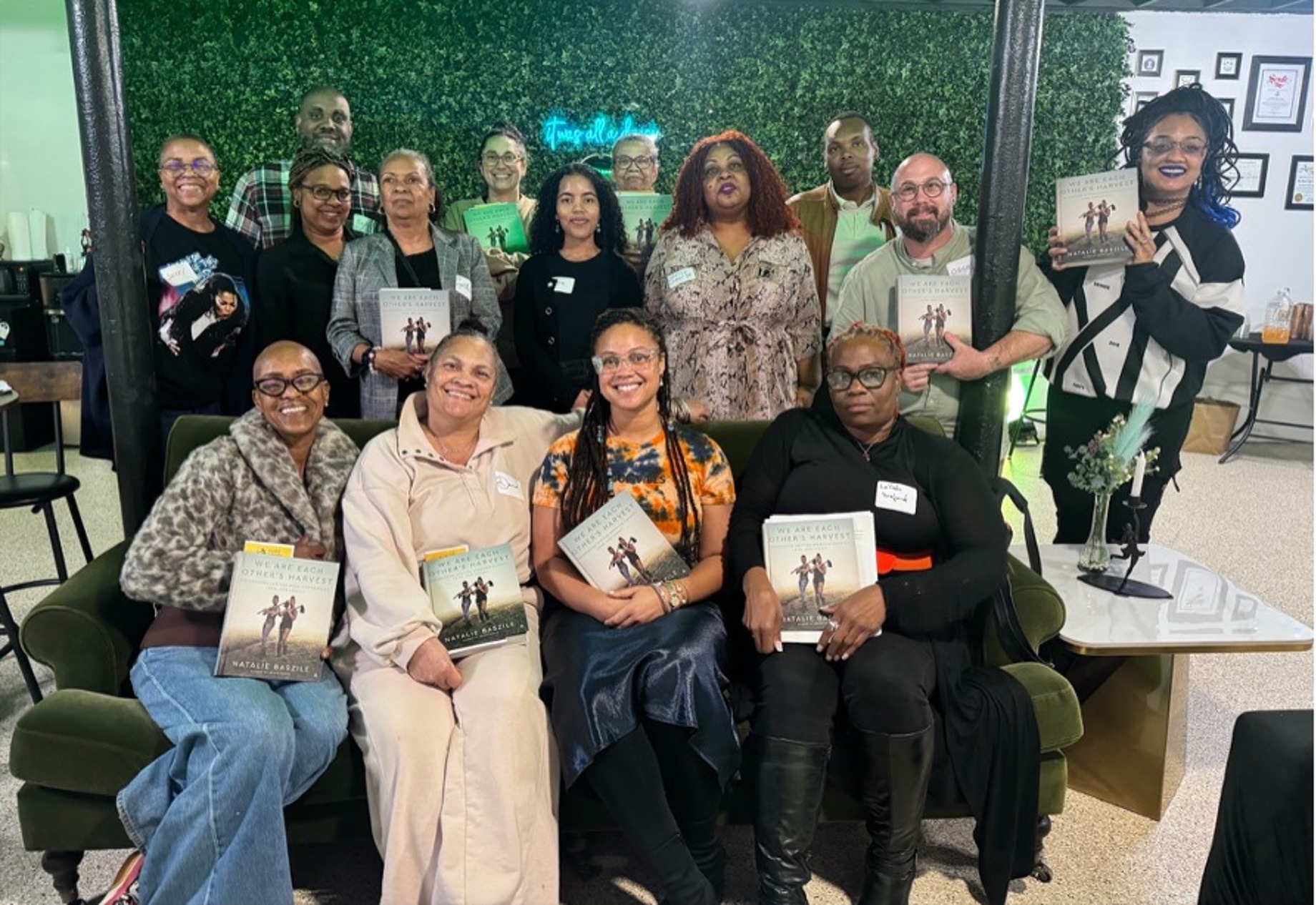 Photo courtesy of the San Diego Public Library
Throughout the cohort, participants discussed the challenge of making sure partners who may co-facilitate are aligned on the multipartial approach. If possible, having them go through training is a helpful way to ensure everyone is on the same page. If not, outlining clearly how the session will be run and the techniques to be used to facilitate is key. Libraries may consider using partners in other parts of the process instead – marketing, outreach and engagement, developing and refining plans, etc. – if they are unsure if the partner will be able to effectively deploy the multipartial approach.
Step outside the library metaphorically
One of the biggest themes that emerged during coaching calls was the importance of thinking beyond library needs and opportunities and not mixing purposes for the event. There is an understandable tendency to want to use the event as a focus group for the library. It makes sense - individuals who may not otherwise come to the library or may be underserved by the library are in the room and ready to talk, and library staff are eager to use that time to ask questions about how the library could better serve them. However, that interest should not become the driving force of the event – the goal should be to create a dialogue that affirms, supports, and serves the community, not the library.
To be sure, through the course of conversation, libraries will learn much more about these individuals and communities’ needs, interests, passions, and desires, and should be thinking about how the library can continue to be a part of that equation. But asking questions specifically targeted to the library’s needs does not serve the purpose of the event, nor does it often elicit illuminating information from someone who has been otherwise disengaged. Instead, libraries should focus on deep understanding of the community, using their own expertise about the library’s capabilities to translate information learned into future library action.
The conversation about employment opportunities for youth conducted at Cincinnati & Hamilton County Public Library in Ohio illustrates these ideas in practice. Young people were not brought into the room primarily to provide feedback to the library. Instead, they helped shape and design the program itself and were then centered as important contributors to the broader conversation, sharing their knowledge and experiences with employers, and workforce organizations. As Cincinnati staff observed, “the most meaningful information flowed from youth to other stakeholders.” This is an important shift in perspective: the library’s role is not always to gather information from the community, but to create the conditions for community members to learn from and with one another.
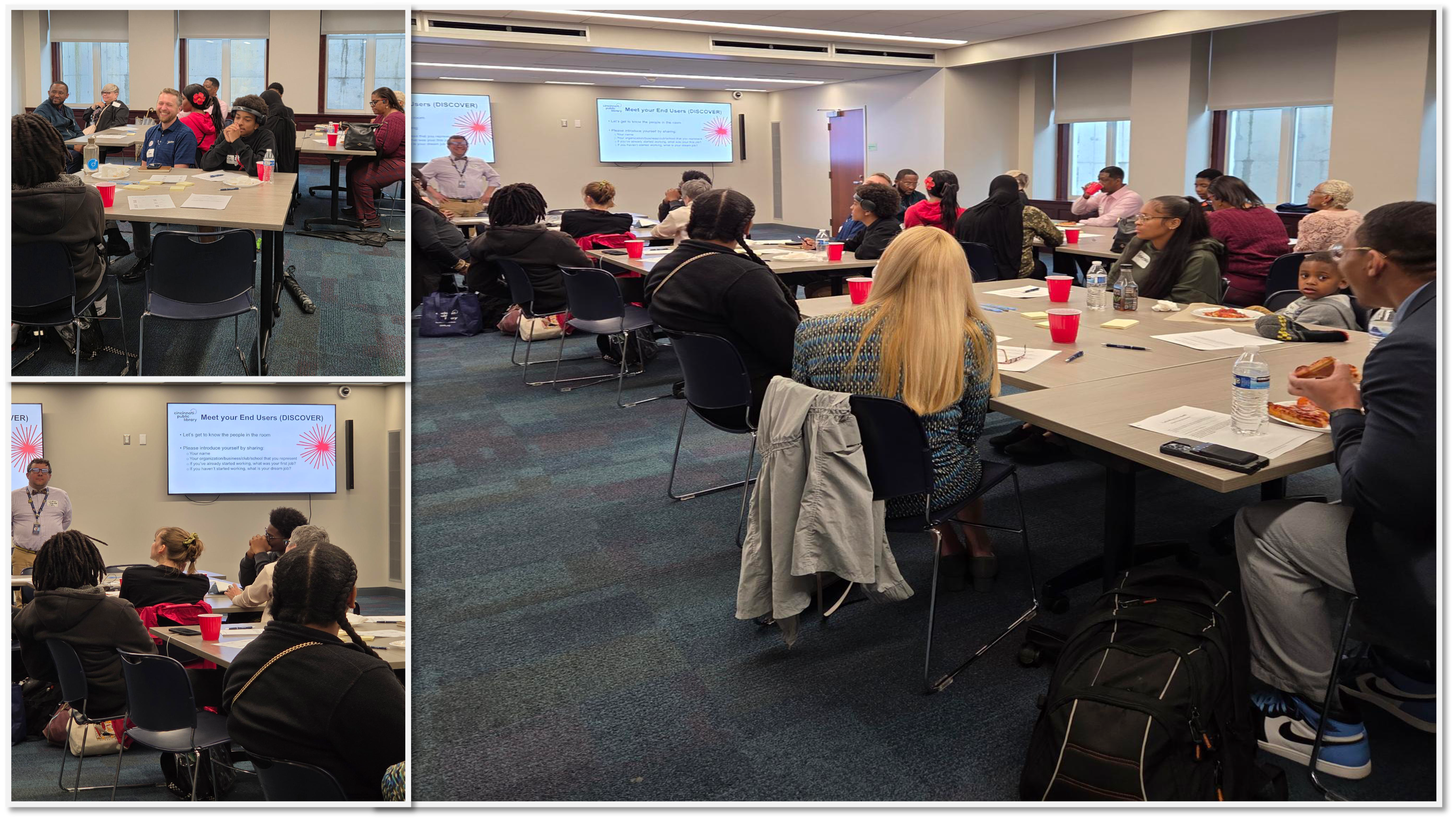
Photo courtesy of the Cincinnati & Hamilton County Public Library
Similarly, at Markham Public Library in Ontario, staff engaged the community in conversations around affordability. During the event, a resident shared her experiences having been threatened with eviction and ultimately forced out of her apartment after years of heating and water issues. Because of the rising cost of rent, the woman ultimately had to move out of the city, and even though she had legal options, she couldn’t afford to pursue them, nor has she been able to obtain a sufficiently high mortgage to buy a home. This story helped staff facilitators increase their understanding of the lived experience of low-income residents facing compounding pressures and how a family’s stability can be uprooted by one landlord’s actions. Conversations like these helped library staff more deeply understand their community and what was important to them and will be useful as the library staff move forward and continue to engage.
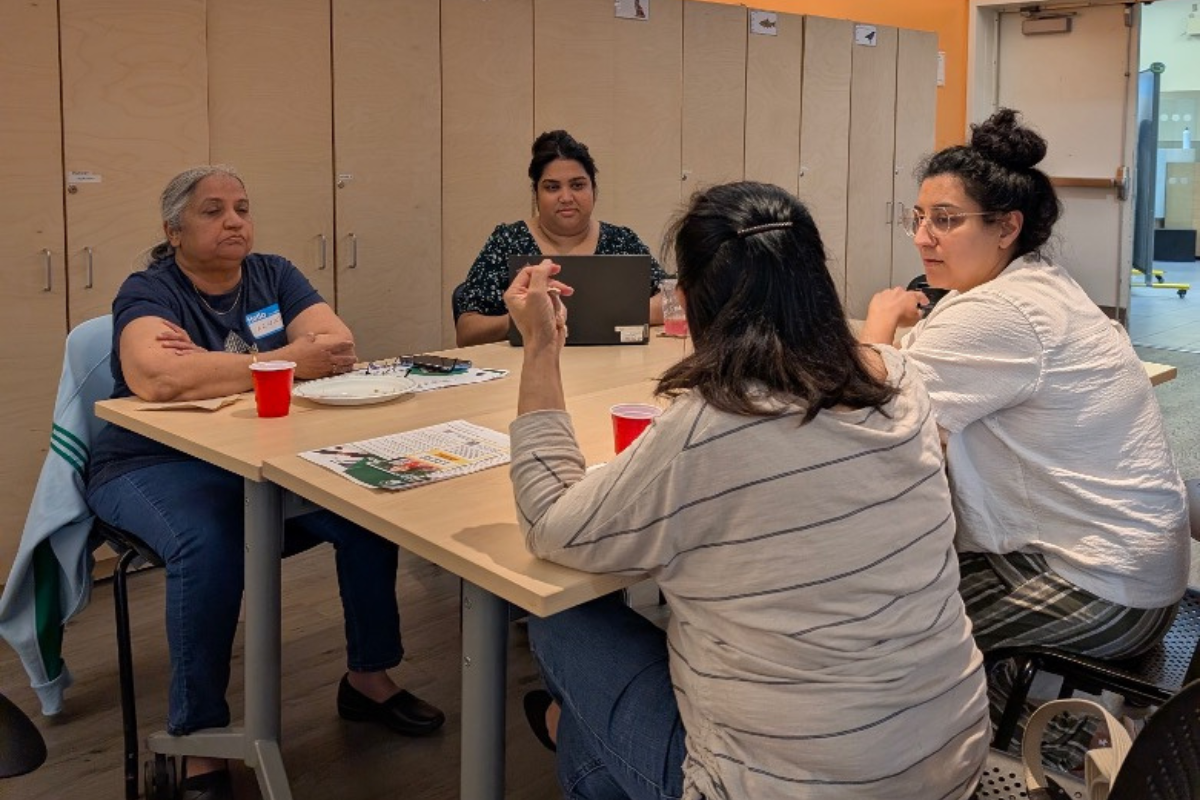
Photo courtesy of Markham Public Library.
Document and communicate impact
In a large, urban library system with often overtaxed communications teams and lots and lots of programs to promote, it can be difficult for a library to dedicate significant marketing resources to promoting or documenting and sharing the impacts of a smaller program like a community conversation. However, while small and less splashy than some of the larger programs libraries might do, we know that these programs can have deep meaning and lasting impacts on attendees who show up and engage. We also know that library staff do not always have the capacity or tools to thoroughly document or communicate impact.
One of the things we focused on through this cohort was making sure libraries were equipped to tell stories of impact. That can be as simple as making sure one staff member is a designated documenter, taking photos and writing down key quotes during the conversation that demonstrate growth. Afterward, library staff can share that documentation with their comms teams and potentially turn it into a press release, social media post, or other dissemination for the library to show their impact. As we worked with libraries, we emphasized the value of what can appear to be small stories. To a library staff member, it may feel like just another day of work, but to an outsider, the moments of connection and civic learning that libraries can foster through community conversations are both surprising and deeply valued. Taken together, they tell a compelling story about the vital role the library can play in bridging divides.
Funding is nice to have, but not required
The $1,000 of funding was, of course, helpful for making the events more appealing and accessible for many, and staff used the funds for such things as providing meals for participants, reimbursing staff time, and getting documentary screening licenses. In Markham, Ontario, staff were able to use the funds to provide childcare so parents could attend, greatly increasing access.
However, funding is not required for this event to happen! If you have at least one interested staff member, a room, and some chairs, you can have an event. This is also a great opportunity to repurpose and build on what you already have. In Las Vegas-Clark County, library staff capitalized on an already existing special needs storytime program to add on a dialogue with families. The captive audience was already present and it create a great opportunity to extend the meaningful experience for this group, creating an experience that served all members of the family. Similarly, others incorporated these skills into already existing book club series, enriching and expanding the conversations and the audience for programs that already existed.
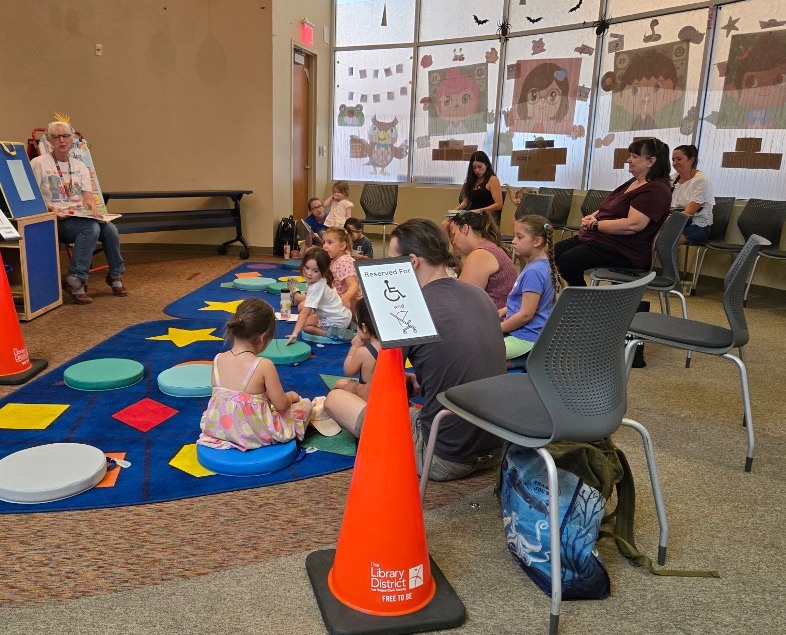
Photo courtesy of the Las Vegas-Clark County Library District
Ripple Effects and Looking Ahead
At a wrap-up webinar for this project on September 15, several library staff shared how they are already seeing the reverberations of this work in their community. In Edmonton, Alberta, library staff convened a community conversation about how different stakeholders experience the downtown area. Afterward, they shared notes with everyone who attended. As the library staff facilitator explained, “I have since heard that those notes have made their way through other working groups and committees that are working [...] in our downtown core. And so those seeds are going all through the work that’s happening in community activation in this area.”
Many others expressed plans to continue holding conversations, and using their expanded partnerships and awareness of community needs to continue to serve the community and work alongside them in expanded ways. As we wind down this project, ULC and Everyday Democracy are looking ahead to additional opportunities to support libraries to facilitate community conversations and continue to increase their impact while serving a vital role in civic infrastructure.