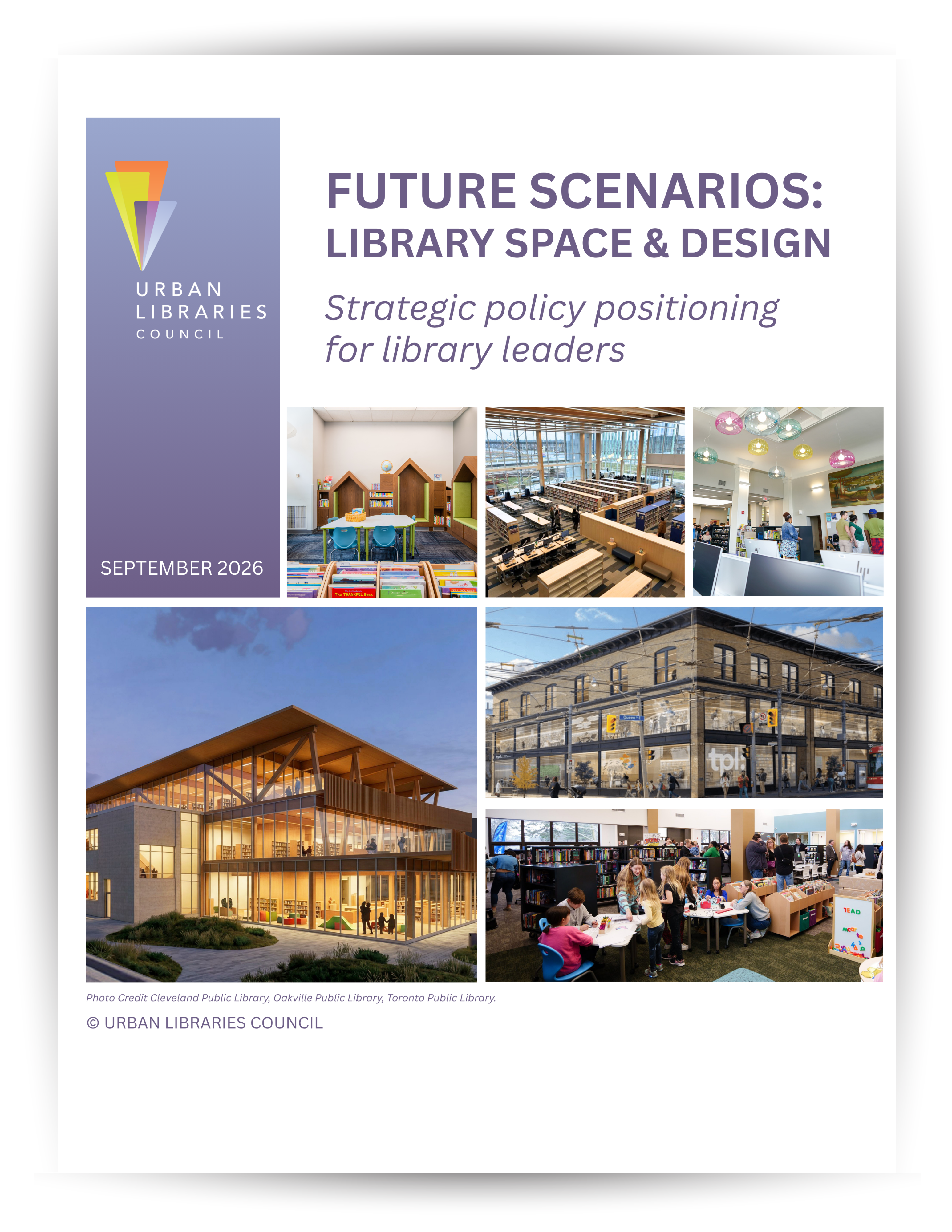
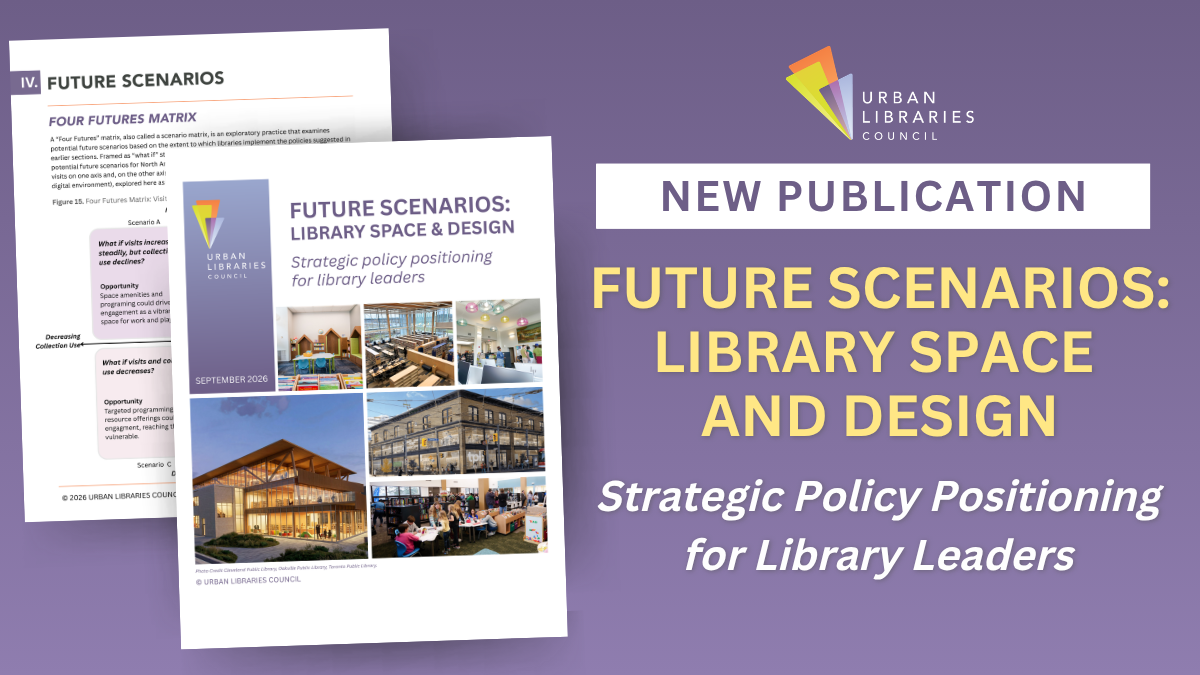
Future Scenarios: Library Space & Design | A new policy roadmap for library leaders

As community needs shift, libraries are among the few civic institutions that provide the stability and essential infrastructure needed to navigate that change together.
ULC’s new policy roadmap, “Future Scenarios: Library Space & Design,” offers recommendations on balancing physical library space and digital technologies to maximize library potential and presents exploratory future scenarios based on those recommendations.
Informed by extensive interviews with member libraries and ULC’s 2026 New Construction Survey, this resource examines how public libraries can continue to navigate a changing world effectively, remain resilient and adaptive, and build public spaces responsive to the needs of tomorrow's patron.
The world we live in is being shaped by various agents of rapid change. This includes digitization, social fragmentation, and economic uncertainty. These changes all bring with them new pressures on the foundations of our social infrastructure, testing whether the promise of shared public life, opportunity, and belonging can still hold.
Public libraries have always been a living expression of their communities, reflecting local needs, history and aspirations, pressures, and possibilities. As our communities evolve ever more rapidly, avenues to make sense of and participate in the molding of future change become even more important.
Libraries are one of the few civic institutions that present the stability needed to help people navigate change together. The mission of the public library is therefore becoming more important, not less. This work, “Future Scenarios: Library Space & Design,” presents a body of policy recommendations for ensuring that public libraries continue to serve their communities by meeting them at the highest point of need.
In this regard, this work focuses on the physical library space and its design as one of the most important elements for ensuring that libraries further establish themselves, moving from nice-to-have amenities to essential civic infrastructure.
This report begins by:
- Examining how patrons use library spaces, programs, and services today, alongside broader community trends shaping public life.
- It then uses those patterns to imagine what future patrons may need and expect from their public libraries.
- Finally, the report translates these insights into future library scenarios shaped by changes in patron behavior, physical space design, and digital infrastructure.
KEY TAKEAWAYS
- Libraries remain trusted public institutions, but the public story must catch up to the full range of roles they now play.
- As third places become scarcer, libraries are becoming essential infrastructure for public life. To maximize potential, future library design should balance digital access with high-quality physical experiences in real life.
- Libraries can become agents for reducing social disconnection by creating places where people know how to participate, belong, and find their way. The future library should help people make sense of change, not simply keep pace with it.
- Technology should augment the library's human purpose, not replace it. The most successful libraries in the future will be both digitally advanced and unmistakably human.