
From Passive Observers to Community Changemakers: What We're Learning About Young Adult Civic Engagement

Photo Credit: El Paso Public Library, Centre Future, 2025 Innovations Initiative
Written by Karina Sharma, Fellow, Urban Libraries Council
What if civic engagement wasn't something young adults learned about, but something they practiced?
To say that young adulthood is a time of enormous transition is an understatement. Many are leaving home for the first time, starting college or careers, navigating new responsibilities, and figuring out who they truly are and where they belong. While many young adults still care deeply about the issues affecting their communities, they often just don't know where—or how—to get involved. U.S. national data shows only 15.8% of people between the ages of 16–29 report belonging to a civic or community group, 19.1% volunteer, and only 11.9% have worked with neighbors to improve their community. There is a tremendous, untapped opportunity to strengthen civic participation during such a formative moment in young adults’ lives.
That’s where libraries come in. As trusted, nonpartisan spaces rooted in community, libraries are uniquely positioned to make civic engagement feel accessible, approachable, and, quite simply, possible. They can offer something many other institutions can't: low-pressure environments where young adults can ask questions, explore ideas, connect with others, and build the confidence to participate in civic life on their own terms.
Through ULC’s recently launched Civic Makers Lab for Adults program, 10 library systems from across the United States are exploring exactly what this can look like. The cohort is designing and testing experiential civic learning programs that help young adults aged 18-24 build civic knowledge through action—whether through community simulations, youth-led projects, or issue-based campaigns. As one cohort member from St. Louis County Library put it, the goal is to help young adults "transition from passive observers to informed, active architects of democracy." Although we're still early in the journey, several valuable themes in our discussions are already emerging that we hope other libraries can also learn from.
1. Civic engagement is about doing—not just learning
The biggest takeaway across the cohort so far is that civic engagement isn't just about teaching young adults how democracy works; it's about creating opportunities for them to practice it. Rather than focusing solely on civic education, they’re translating it into civic action by designing experiences that help young adults actively participate in shaping their communities.
Many libraries are interested in demystifying local government and helping young adults understand how decisions are made, who represents them, and where they can make a tangible impact. But rather than stopping there, they're pairing that knowledge with hands-on opportunities to lead projects, solve local problems, collaborate with grassroots organizations, and create visible change. Charlotte Mecklenburg Library is recruiting young adults to attend and document local government meetings as part of the Documenters Network. Not only are these young people gaining civic skills themselves, but they’re also helping their neighbors become better informed and more equipped to understand and act on the decisions shaping their communities, creating an entire infrastructure of “people-powered civic information.”
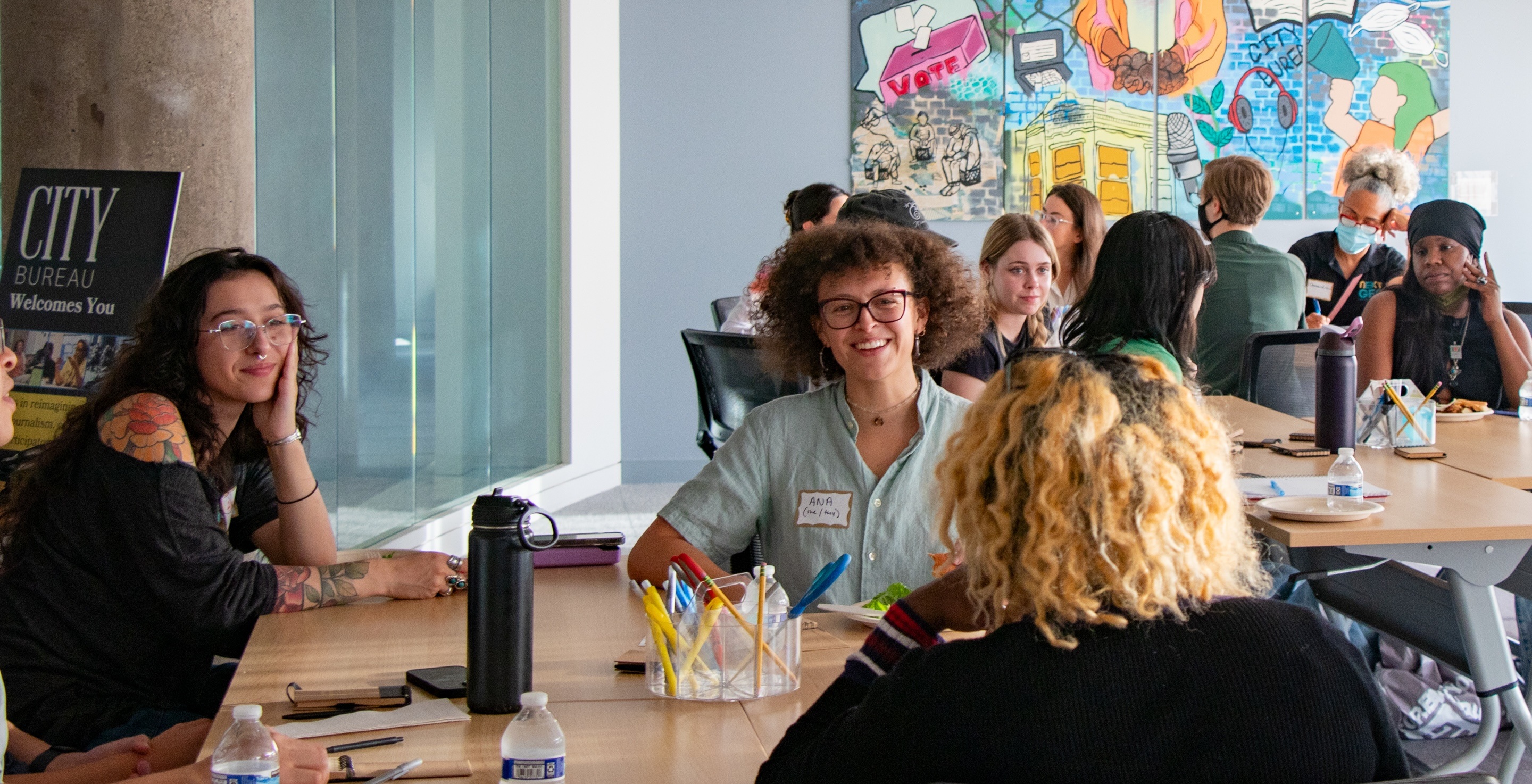
Photo Credit: City Bureau, documenters.org
2. Design with young adults, not for them
Another recurring theme is that successful civic programming starts by giving young adults ownership. Rather than assuming staff know exactly what this audience wants, libraries are building programs alongside young adults through co-creation, advisory groups and ongoing feedback. Several cohort members also noted that this age group often falls into a programming gap—they've aged out of teen services but don't necessarily see themselves in traditional adult programming. Creating pathways specifically for emerging adults helps libraries build programming that feels intentional and relevant instead of like an afterthought.
Boise Public Library is launching The Civic Circle, a forum and advisory group for emerging adults to gather, propose, and facilitate library programming, and lead civic initiatives of their choosing. By creating a dedicated space for young adults to shape what the library offers and how it engages with the community, The Civic Circle gives participants meaningful ownership over their library experience and community as a whole.
3. Meet young adults where they already are
If there's one lesson the cohort agrees on, it's that "if you build it, they will come" doesn't work. Libraries are rethinking both outreach and programming to better align with how young adults communicate and where they spend their time. That means adapting social media voices, partnering with colleges and universities, showing up in community spaces young adults already frequent and connecting civic learning to issues they actually care about—from artificial intelligence and immigration to current events affecting their neighborhoods. The strongest programs aren't asking young adults to come into civic life but are bringing civic life into the spaces and conversations that already matter to them.
For example, Indianapolis Public Library is planning to host pop-up Civic Happy Hours on a nearby university campus. Using interactive, civic-centered activities like board games, art, and trivia, they’re hoping to create opportunities for students to connect with new friends while building civic awareness at the same time. By bringing civic learning into a familiar environment and pairing it with activities that feel social and fun, the library is making civic engagement more accessible to young people’s everyday lives.
4. Belonging comes before participation
Civic engagement isn't just about understanding systems; it’s about feeling like you belong in them. Many libraries are intentionally creating opportunities for connection across generations, cultures, and lived experiences while ensuring historically underrepresented voices are included. When young adults feel seen, welcomed, and valued, they're more likely to believe their perspectives matter and that they have something meaningful to contribute.

Mesa Public Library will be putting this idea into practice with The Opinion Tour 2026, a live music event where attendees can “Pay with Your Opinion” by completing a brief questionnaire about local interests, concerns, and community priorities in exchange for free admission. By creating an inclusive, low-pressure entry point for young adults to connect, be heard, and see themselves as part of their community, the library is building the sense of belonging that can make deeper civic participation possible.
5. Build on the momentum already happening in your community
Many libraries are also recognizing that civic engagement doesn't have to start from scratch. Several cohort members are looking for ways to connect programming to broader moments already happening around them—whether that's a library branch opening, new dedicated youth spaces, community revitalization efforts, or ongoing America250 initiatives. By tapping into existing excitement and partnerships, libraries can lower barriers to participation and make civic engagement feel like a natural extension of what's already happening in the community.

El Paso Public Library offers an inspiring example of this through Centre Future, a program supporting opportunity youth with job readiness, skills development, and wellness programming. While its primary focus isn't civic engagement, it's building the disposition, leadership skills and sense of agency that naturally prepare young adults to become confident civic leaders in the future.
Of course, the cohort has also been honest about the challenges ahead. Recruiting and retaining young adults remains difficult amid busy school schedules, transportation barriers, financial pressures, and competing priorities. Many libraries are also building this work without dedicated young adult staff, established audiences or existing infrastructure, making experimentation all the more important.
Fortunately, that's exactly what the Civic Makers Lab was designed for. Over the coming year, these libraries will continue testing ideas, learning from one another, and refining what works. We're excited to share more lessons, successes, and practical takeaways as the cohort continues exploring how libraries can help the next generation continue to become active participants in their communities.
Related Articles

Embracing the Role of Young Adult Coordinator
"Taking on the role of Young Adult Coordinator for a library system was both a rewarding and challenging endeavor, especially stepping into a role that had been vacant. As the new system-wide coordinator, I had to reimagine young adult (YA) services to meet the needs and interests of our community while offering meaningful and engaging activities that aligned with our library’s mission to inform, enrich, and empower."
Because They’re Worthy: Opportunity Youth and the Need for Genuine Engagement
All young people deserve the opportunity to thrive. This includes those who, through little to no fault of their own, have become disconnected from school or work or who are at risk of so becoming. When opportunity youth are reconnected with school and/or work, their involvement in the criminal legal system lessens, health outcomes improve, and their earning potential increases.