
Seizing the Momentum: Ten Key Takeaways from ULC's 2026 CEO Roundtable
Summarized by Tommi Laitio and Juan Arellano (Studio Laitio)
It is clear that no successful library can be impactful or successful without partnerships. As a CEO or a Library Director, you need to translate between the worlds outside and inside the library to understand what the community needs from the library and help the community understand what the library can provide.
While no library system is identical, all libraries can learn from all libraries. Every year, the Urban Libraries Council’s annual CEO Roundtable is an opportunity to convene with peers, to share your lessons and approaches, and ask for guidance. The Roundtable is always intentionally designed as a confidential space, fostering cooperation rather than competition.
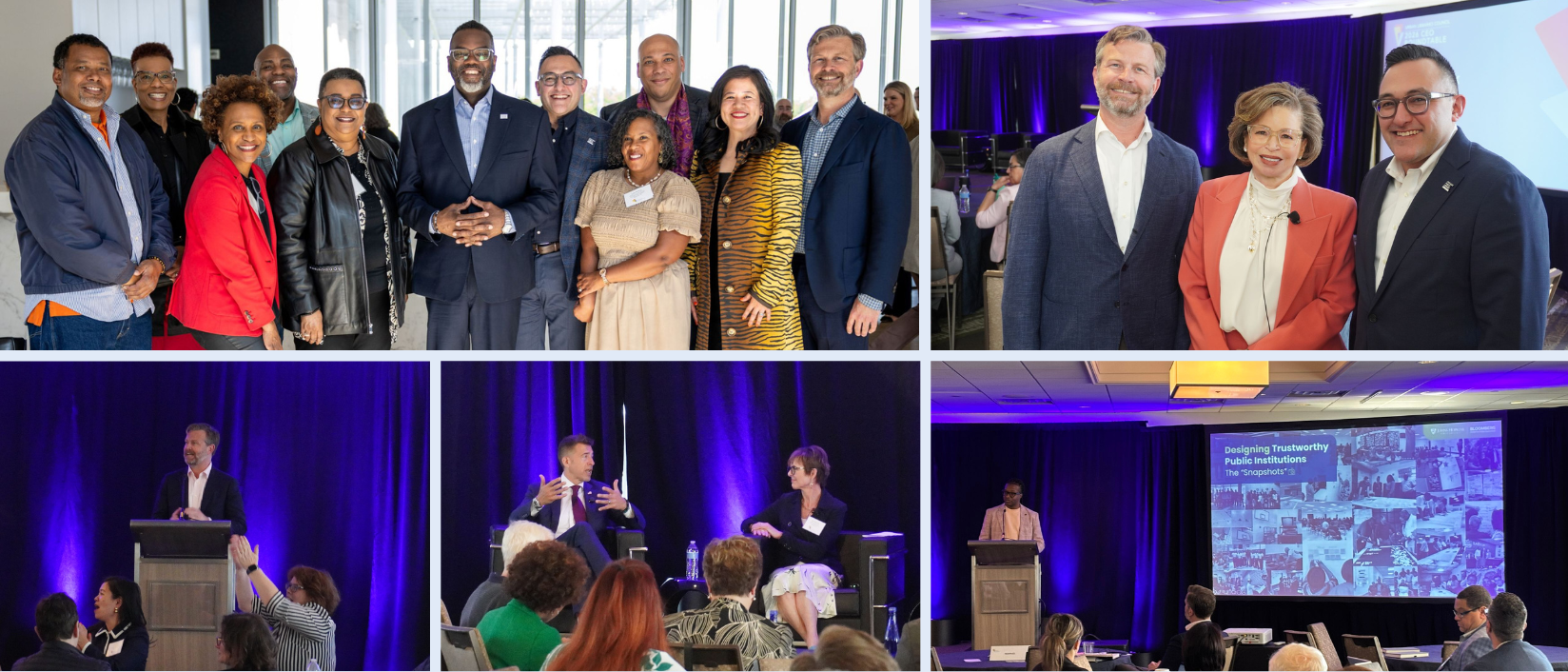
The 2026 CEO Roundtable was held in Chicago earlier this month, in collaboration with the Chicago Public Library and the Chicago Public Library Foundation. The sessions focused on:
● Collaboration with schools, with CEO Macquline King and Director of Literacy Jane Fleming (Chicago Public Schools), and Commissioner Chris Brown (Chicago Public Library)
● Building strong partnerships, with Interim CEO Bob Wislow and Chair Michael Fassnacht (Chicago Public Library Foundation)
● Advocating for libraries, with Chief Librarian Tom Fay (Seattle Public Library), Secretary of State and State Librarian Alexi Giannoulias (Illinois), and CEO Pilar Martinez (Edmonton Public Library)
● Collaboration with vendors, with VP Ann Ford (Hoopla) and Commissioner Chris Brown (Chicago Public Library)
● Seizing the momentum, with CEO Valerie Jarrett (Obama Foundation), Deputy Commissioner Maggie Clemons, District Chief Nesha Saunders (Chicago Public Library), and Branch Director Marcus Lumpkin (Obama Presidential Center)
● Leadership and Trust, with Chief Innovation Officer Terrance Smith (City of Baltimore)
Here are ten takeaways from the convening...
ON LITERACY
1. System-Level Collaboration
Chicago Public Library and Chicago Public Schools just provided a library card and access to its collection with one click to all 315,000 of its public school students. It has taken 15 years to get here. The opportunities are endless. Read more: Chicago Public Library: Mayor Brandon Johnson, Chicago Public Library and Chicago Public Schools Expand Automatic Library Access to More Than 315,000 Students
2. Literacy at the Laundromat
The trends in literacy skills and reading for pleasure are alarming. The next big challenge is taking literacy work to where people are. This means everything from grocery stores to mobile phones, from laundromats to county jails. Libraries can embrace summer months as a time for experimentation and collaboration. Sometimes the best lessons come from things that did not go as planned. Read more: Chicago Tribune: A librarian’s dream helps turn a waiting area at Cook County Jail into an educational nook for children who visit the incarcerated
3. Joy in Reading
Chicago Public Library and Chicago Public Schools have centered their collaboration around fostering joy in reading. To build a strong culture of reading, we need to promote reading as something we do for pleasure, not obligation. Joy in reading is deeper than having fun. According to CPS Director of Literacy Dr. Jane Fleming, joy in reading comes from engaging with texts where they see themselves and their families represented and valued, texts that support bilingual and biliterate learners, from conversation and debate, from integrating arts and music, from having agency over projects, from inquiry and exploration, from a sense of wonder and discovery and from achieving and celebrating milestones. Read more: Dr. Jane Fleming | Thinking Beyond Reading
ON PARTNERSHIPS
4. Build partnerships and advocacy groups before you need them
Across the conversations, the message was clear. Building advocacy networks and civic partnerships takes time. The old rule is true: you have to be interested to be interesting. This means learning about others before asking for something and not going straight to the money. Invite potential partners to experience your work, prove its relevance with firsthand experiences, stories, and data, and present an opportunity for greater impact. Read more: New York Times: The Chief of Chicago’s Science Museum Is Doing Some Experiments
5. Build a kitchen cabinet/challenge network
Every leader needs friends inside and outside the library field who are on their side but support and challenge their thinking. Make sure you have at least five leaders in your community from different sectors and a few library colleagues you can call to think things through with. Watch: Adam Grant: Why Every Leader Needs a Challenge Network
6. Show up with the capacity to produce
Build a reputation of a generous leader who gets things done. If it takes you five minutes to help someone, do it without thinking. Have an answer ready when someone asks how they could support the library. Watch: Adam Grant: Five Minute Favor
7. Underpromise and overdeliver
A simple definition of quality is deducting expectation from experience. It’s always better to exceed people’s expectations than fall short. Watch: City Club Chicago: Valerie Jarrett on the road to the Obama Presidential Center
Read: New York Times: The Audacity of Art at the Obama Presidential Center
ON TRUST AND FICTION
8. Stay calm and measured, even when others don’t
The discussion on intellectual freedom runs high on emotion. These times test institutional leadership and resilience. Build your arguments around public support, parental agency, freedom and transparency. Read more: Influence: The Psychology of Persuasion by Robert B. Cialdini
9. Be trustworthy before asking for trust
In a democracy, some skepticism towards institutions is healthy. Uncritical trust is also destructive for innovation. Trust is not something you have or don’t, it is a spectrum to manage. Sometimes people have good reasons not to trust you or your institution. They might have had a bad experience in the past or they just don’t know you. Lack of trust or loss of trust are always opportunities for making a difference. Read more: Terrance Smith: Navigating Trust
10. Build coalitions while acknowledging differences
Our time feeds scarcity thinking, where someone needs to lose for others to win. Make conscious efforts to keep communication channels open, even with those who agree with you on 10 percent of issues. Seek ways to find mutual wins with vendors. Sometimes the best way to ease tensions is to be open about the things you agree on and the things you do not. Read:
Thank you again to those who were able to join us at the 2026 ULC CEO Roundtable. Special thanks to the Chicago Public Library team and Commissioner Chris Brown for hosting us in your beautiful city. ULC also extends our gratitude to our program sponsor, Hoopla, for the generous support of this event.
We look forward to seeing you all next spring for the 2027 CEO Roundtable in San Francisco! Stay tuned for dates.