Summer Reading Evaluation Toolkit
Cincinnati & Hamilton County Public Library
Innovation Synopsis
The Summer Reading Evaluation Toolkit is a youth-centered evaluation framework that helped the Cincinnati & Hamilton County Public Library measure the impact of Summer Reading beyond participation numbers. Developed in partnership with the University of Cincinnati Evaluation Services Center, the toolkit used creative, age-appropriate activities to gather direct feedback from children and families about motivation to read, enjoyment of reading, connections with Library staff, and the Library's role as a safe and positive community space. The initiative transformed evaluation from a traditional survey into an engaging experience that captured authentic youth voices.
Challenge/Opportunity
Summer Reading has traditionally been evaluated through output-based metrics such as participation, circulation, books distributed, and program attendance. Historically, it is difficult to measure participant outcomes directly.
The Library values customer privacy and does not use extensive surveys, collect significant personal information, or conduct pre- and post-tests commonly used in educational settings.
Library staff needed a way to understand whether Summer Reading was increasing motivation to read, enjoyment of reading, literacy development, and connection to the Library.
The Library also wanted to hear directly from children and families rather than relying solely on operational metrics.
The initiative was designed to create meaningful, youth-centered methods for gathering outcome data while maintaining flexibility for all 41 Library locations
Key Elements of Innovation
Co-developed with the University of Cincinnati Evaluation Services Center.
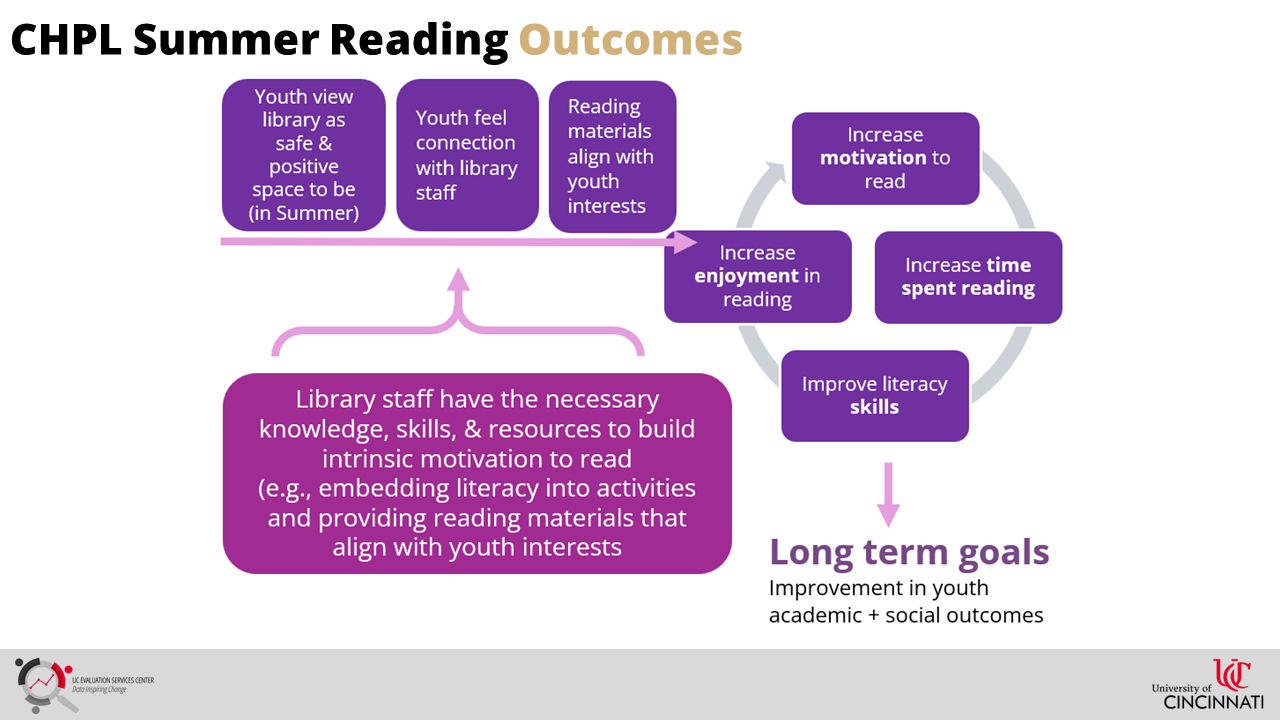
Built around a Summer Reading logic model identifying key outcomes, including motivation to read, enjoyment of reading, literacy skills, connections with Library staff, and perceptions of the Library as a safe and positive space.
Implemented systemwide across all 41 Library locations, with each branch selecting at least one evaluation activity best suited to its customers and programming.
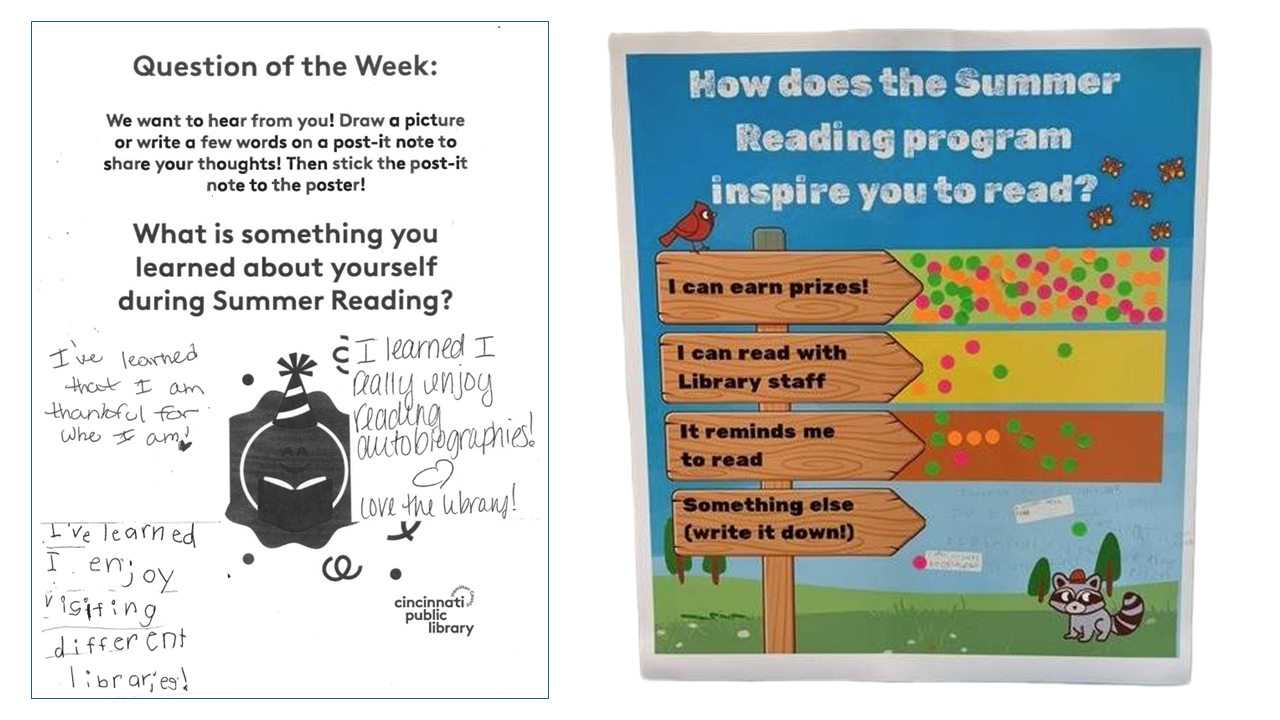
Includes innovative participatory evaluation methods such as Community Pop-Ups, Community Maps, Values Walks, Photo Journals, and youth storytelling activities. These approaches allow children to provide feedback through drawings, conversations, movement, voting, and creative expression.
Innovates library evaluation by replacing traditional surveys with engaging experiences that generate both qualitative and quantitative data while elevating the voice and perspective of youth.
Achieved Outcomes
Participation in Summer Reading increased in 2026, with 32,628 participants. Child participation reached 28,776, up 7.2% from 2025, while teen participation grew to 3,521, up 12.2%.
More than 2,800 youth and caregivers participated in evaluation activities across all 41 Library locations, generating extensive customer feedback.
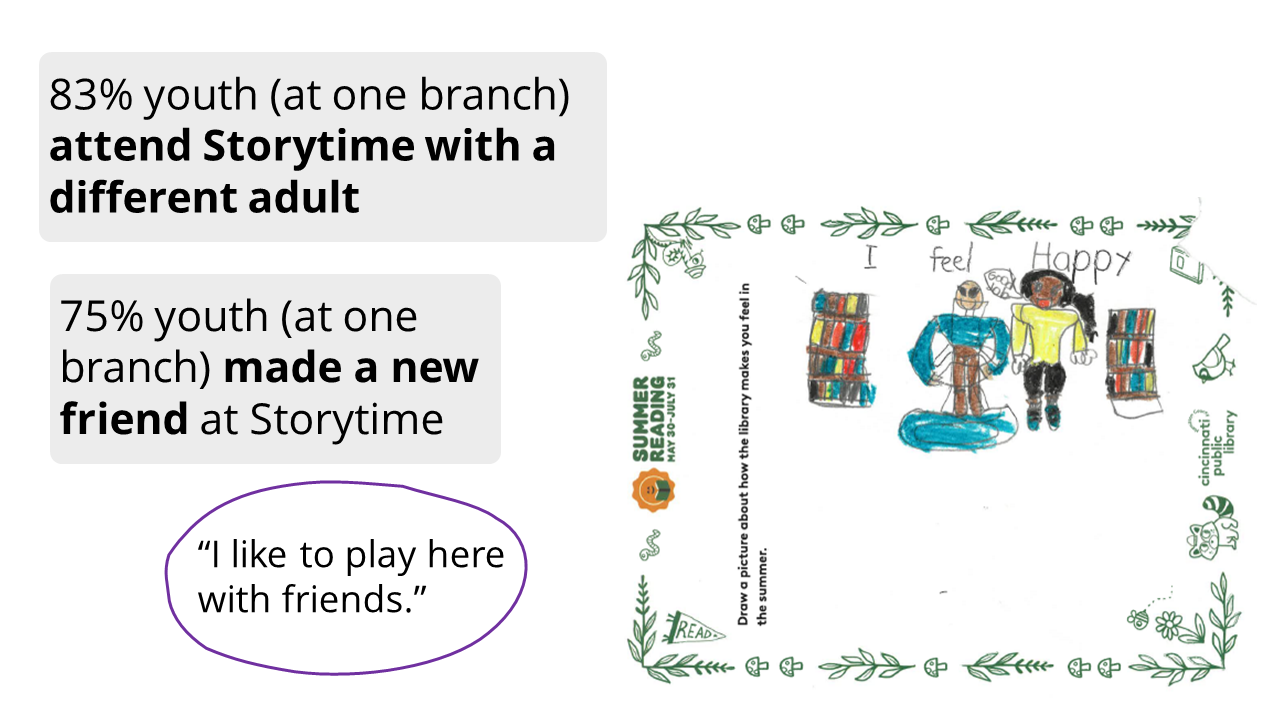
Findings showed youth view the Library as a trusted, welcoming space, value relationships with staff, and report increased motivation and enjoyment in reading.
Library staff were repeatedly identified as essential to participant success. At one location, 48 of 49 youth said staff helped them complete Summer Reading.
A new partnership with the University of Cincinnati Evaluation Services Center brought evaluation expertise and established a framework for future outcome measurement.
Staff reported that evaluation activities encouraged meaningful conversations, increased engagement, and provided valuable insights for program improvement.