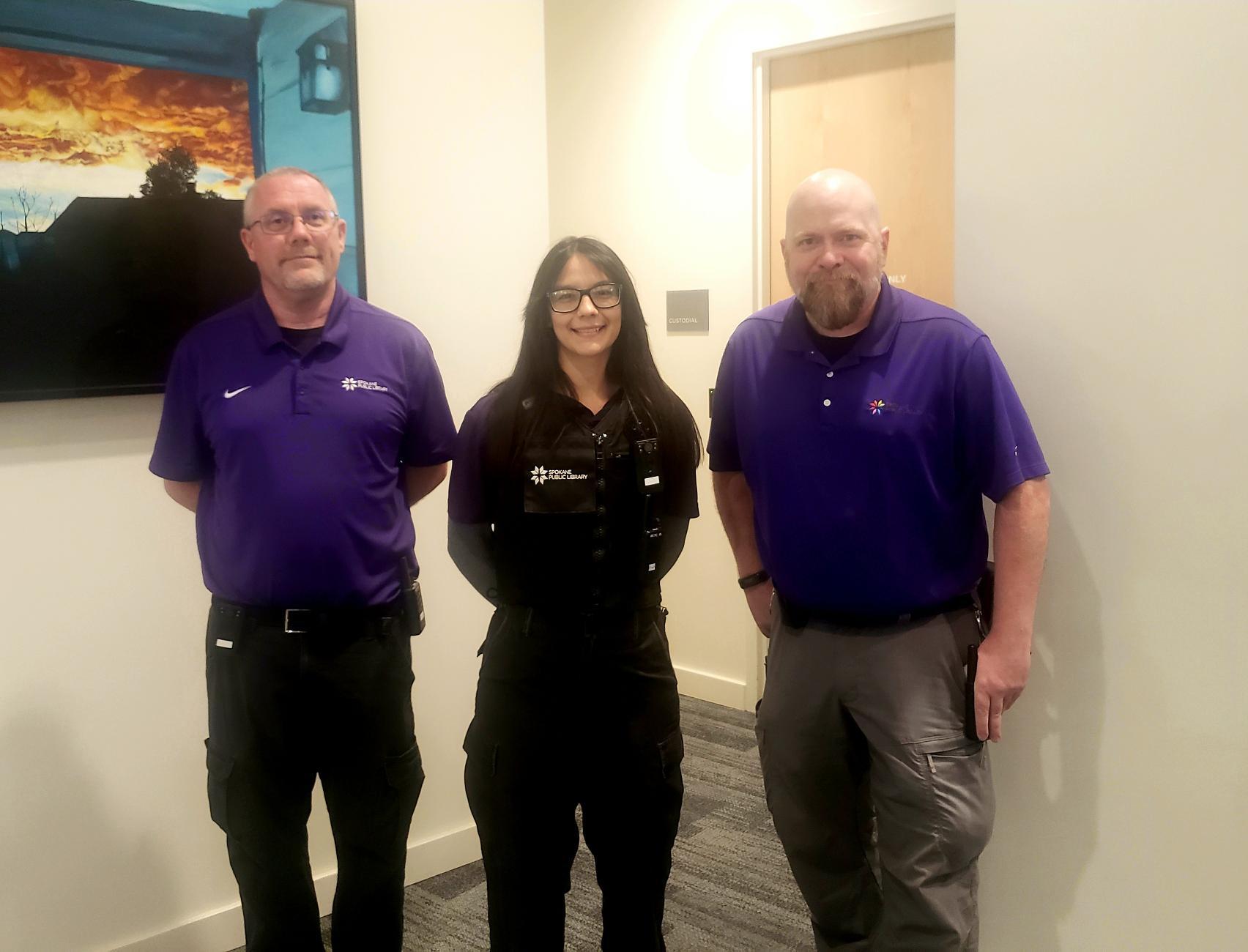
S.T.O.P. Safety Team Model
Spokane Public Library
Innovation Synopsis
Over the year following a July 2025 leadership change, Central Library's Safety Team rebuilt itself from an enforcement-first security presence into a de-escalation-first, community-connected team. Guided by a new operating manual (S.T.O.P. — Safety Team Operating Procedures) built around the mission "You're Safe. You're Accepted. You Belong," the team adopted formal verbal de-escalation strategies, began systematically connecting patrons to social service resources (including on-site Narcan and Navigation Center referrals), and instituted a structured After Action Review process so every significant incident produces documented learning and follow-up action. The result: a 23% drop in security incidents comparing February–July 2025 to February–July 2026, continued acceleration into 2026's lowest months on record, and a measurable rise in staff perception that the organization is dedicated to their safety.
Challenge/Opportunity
Prior to mid-2025, Central branch security operated primarily as incident response and enforcement, without a formalized model for de-escalation, structured post-incident learning, or connecting patrons in crisis to social services. Internal staff survey comments from 2024 described inconsistent manager support after safety incidents, uneven application of policy, and a sense among some frontline staff that safety was not always prioritized at the Central branch specifically. At the same time, Central absorbs the large majority of system-wide security incidents — roughly three-quarters of all incidents across the library system's branches occur there — making it the highest-need site for a more effective, sustainable safety model that protects both staff and the vulnerable patrons the library serves.
Key Elements of Innovation
The team codified its practice into a single operating manual (S.T.O.P.) built on explicit ethics: enforcing policy equitably, leading with empathy to de-escalate, and connecting customers to social service resources rather than defaulting to exclusion. Concrete changes include: verbal de-escalation training grounded in Verbal Judo principles (offering options rather than threats, maintaining physical space, backing up teammates); a formal After Action Review process requiring every significant incident to be reviewed for friction points, positive actions, and follow-up steps; a structured weekly trespass appeal hour with a documented review process; equipment reflecting a harm-reduction posture (Narcan carried by all team members, Navigation Center handouts); and a substantially expanded internal library of training materials, protocols, and reference resources built out over the course of 2025.
Achieved Outcomes
Comparing February–July 2025 to February–July 2026 (the cleanest available year-over-year window, both fully within Central's current incident-tracking system), total security incidents fell from 369 to 285 — a 23% reduction. The decline accelerated over the year: May, June, and July 2026 were the three lowest-incident months on record under the current system, with July 2026 down 50% year-over-year. Staff perception data shows a parallel shift: the percentage-weighted survey score for "I perceive the organization to be dedicated to employee safety" improved from 1.94 (2024) to 1.41 (2025) [lower = stronger agreement], with continued improvement in trust that managers will support staff after a safety incident.