Partnerships, Training, & Security Initiative
Poudre Libraries
Innovation Synopsis
To improve the mental and physical well-being of both customers and staff, Poudre Libraries looked holistically at the systems and structures in place at our downtown (Old Town) library.
The resulting improvement plan “Partnerships, Training, & Security” has engaged multiple community partners, provided essential training to bolster staff skills and mental health, and brought security in-house.
2026 is the final year of a three-year pilot program that involved refining all three components establishing operational funding.
Challenge/Opportunity
In 2019, Poudre Libraries’ Old Town branch had 177 incident reports, and an increasing population of unhoused community members. The 2020 pandemic closed library buildings, but reopening meant a resurgence of incidents and friction. Incidents became more serious, culminating in a customer attempting to take their own life on library property.
In 2023, library administration searched for a collection of services and improvements to create a safer, healthier environment for staff & community. We were, however, cognizant of mission creep and our own assets and deficits. We did not want to become social workers, and we didn’t want to overextend financially.
The district determined its biggest asset was the ability to bring together different entities within the safety of library spaces. Administration brainstormed how to create a hub of services that would provide what the community needed while protecting the mental & physical health of everyone in the library space.
Key Elements of Innovation
• Three-year pilot program (2024 – 26); primarily grant-funded
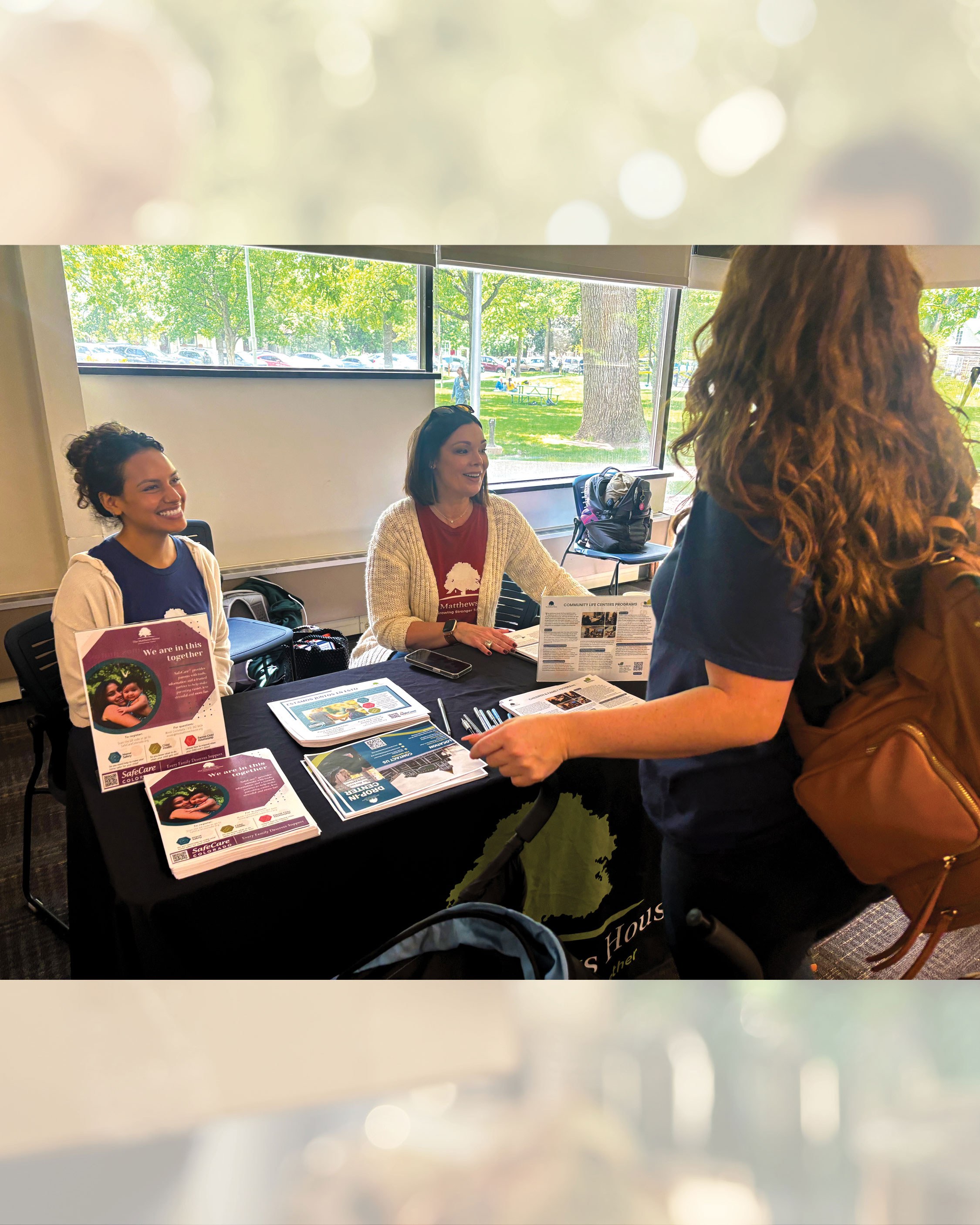
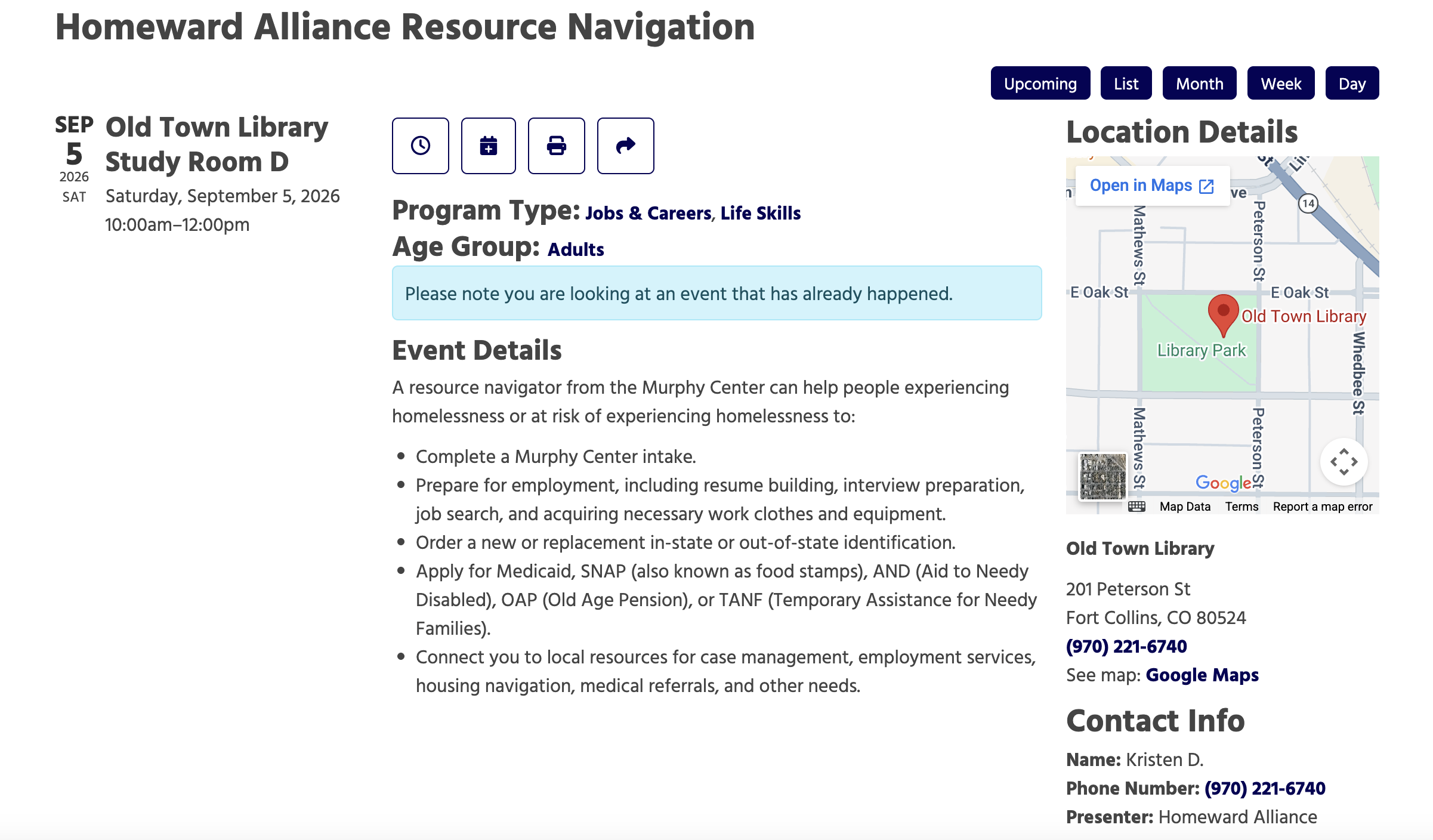
• Created hub of social service providers on-site at Old Town Library. This includes local partners providing assistance to customers for housing/sheltering, mental health & substance abuse, job skills, mental & physical disabilities, digital navigation, and other life skills.
• Began offering staff training through local partners around issues of de-escalation, and mental health resilience. Partners also provided staff with mental health resources like a wellness room where staff can go when they are under stress.
• Brought security in-house with a head of security and two security officers (2.25FTE). Focused on de-escalation skills, building strong rapport with local police, and security working closely with social service providers. We retain a private security contract for on-call services when our small in-house staff is unavailable.
Achieved Outcomes
• Quantitative Assessment Metrics: Incident report to door count ratios, and number of staff trainings related to mental health and de-escalation.
• Qualitative Assessment Metrics: Staff feedback
In 2019 we had a ratio of one incident for every 1,266 patrons through the doors. In 2023 before we began the Partnerships, Training, & Security initiative our incident ratio was one incident to every 2,014 patrons through the door. At mid-year of 2026, our incident ratio had fallen to one incident for every 5,795 patrons through the door, a significant decline.
Since 2024 we have held over a dozen different staff trainings on topics from Boundary Setting to QPR (Question, Persuade, Refer) and Crucial Conversations.
Staff quote on this initiative's impact: “I have seen people’s lives change due to these services. I have seen people light up when I say we have a resource from the community that they can access right here, right now"