Mind the Gaps: Equity-Informed Service Planning
Kitchener Public Library
Innovation Synopsis
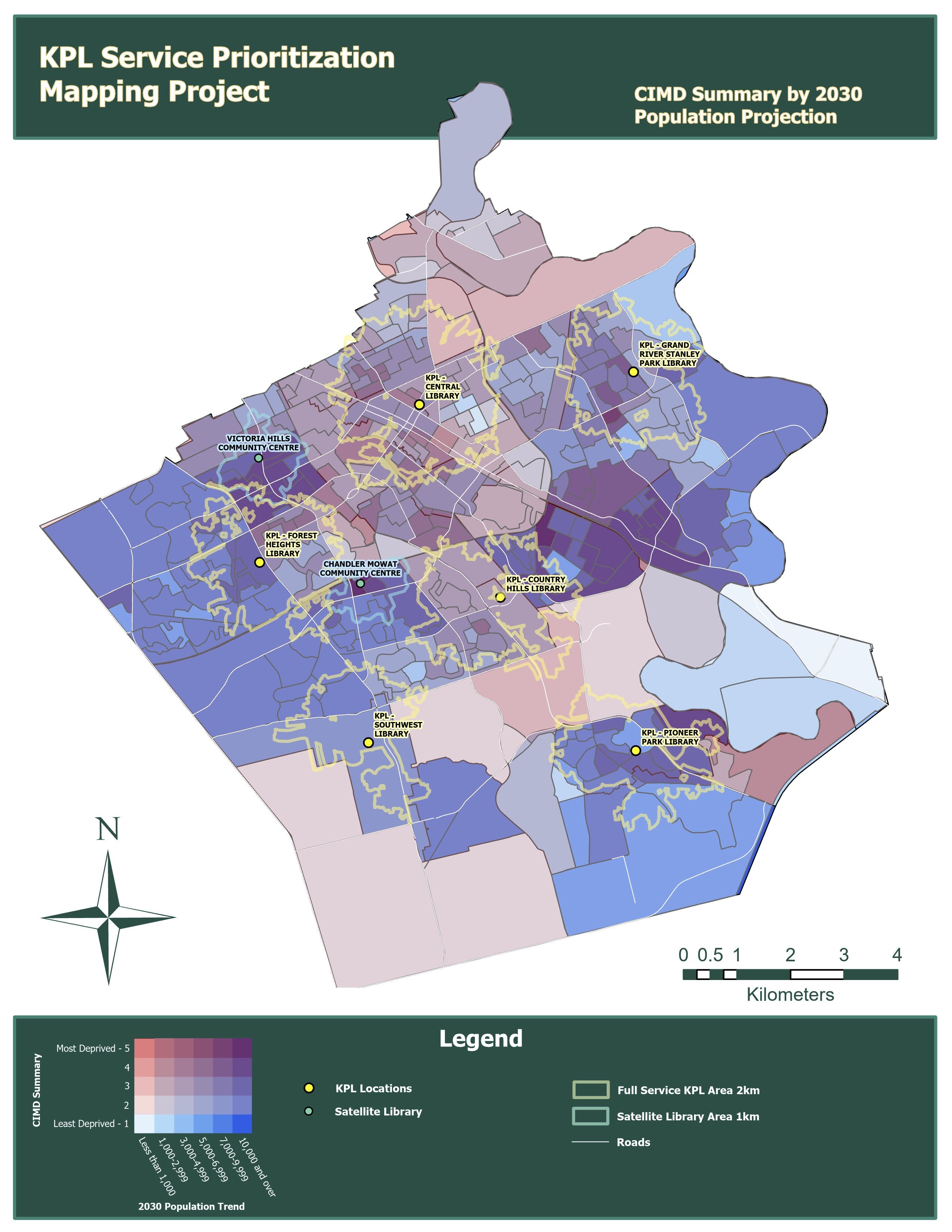
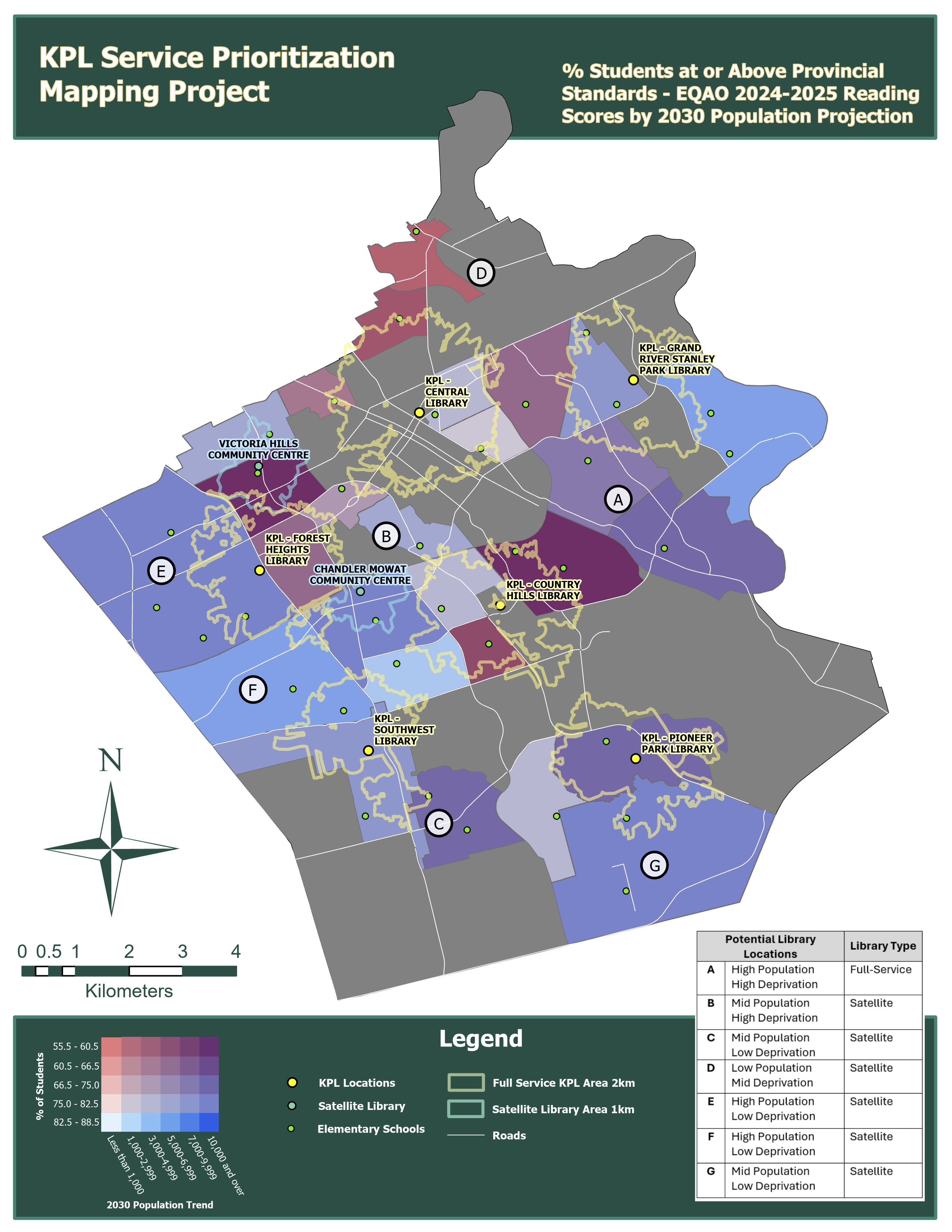
Kitchener Public Library and the University of Waterloo’s Future Cities Institute created a replicable, evidence-based and equity-informed model for identifying library service gaps. Its primary outputs are updatable maps combining geographic access, current and projected population, literacy indicators, and census-based measures of demographic, economic, housing and vulnerability conditions to show priority gap areas and their scale. The maps establish the evidence base for KPL’s next phase: a master plan matching service presence, scale and scope to community needs and fiscal realities.
Challenge/Opportunity
Early service-planning maps used equal-radius, “as-the-crow-flies” circles around library locations. They showed who lived far from a branch, but not the scale of need or how barriers differ among neighbourhoods. Equal geographic coverage is not necessarily equitable service: a high-population area experiencing greater socioeconomic need or lower literacy may require a different response than distance alone suggests. In a changing fiscal environment, a new full-service branch cannot be the only answer, particularly when needs require a more immediate response. KPL needed to identify and rank gaps before selecting scale and scope of service delivery according to local need and available resources.
Key Elements of Innovation
Equity methodology: KPL and Future Cities documented indicators and rationale, data sources, calculations, scoring and interpretation. It draws on the Canadian Index of Multiple Deprivation and elementary school-level literacy data and reflects public-sector equity practices.
Prioritization framework: The team combined equity scores, geographic access and current and projected population through transparent weighting. It delivered mapped recommendations, an adjustable staff tool and update guidance.
Partnership and testing: The Future Cities Institute selected the project because of its innovation, potential for extension and generalizability to other systems, then pressure-tested the model through geographic overlays.
Application: KPL can compare neighbourhood need before choosing among central, district or neighbourhood libraries, lockers and other extensions. Inputs and weights can change as evidence, conditions and priorities evolve.
Achieved Outcomes
A documented equity-scoring methodology; a weighted neighbourhood prioritization framework; recommendations and insights; an adjustable tool; maintenance guidance; and map-compatible outputs were all completed.
The analysis generated attached maps that integrate access, population and equity to identify priority neighbourhoods without selecting individual sites.
KPL now has its first transparent and repeatable basis for deciding where library presence is most needed and for testing service and budget recommendations.
The work moves equity from a broad commitment to an auditable planning practice: indicators, calculations and weights can be explained, challenged and refreshed.
The framework can be adapted by other libraries using local data, priorities and service models, and the project can be extended to further refine a generalizable model.