Improving Language Access via Phone Interpretation
Denver Public Library
Innovation Synopsis
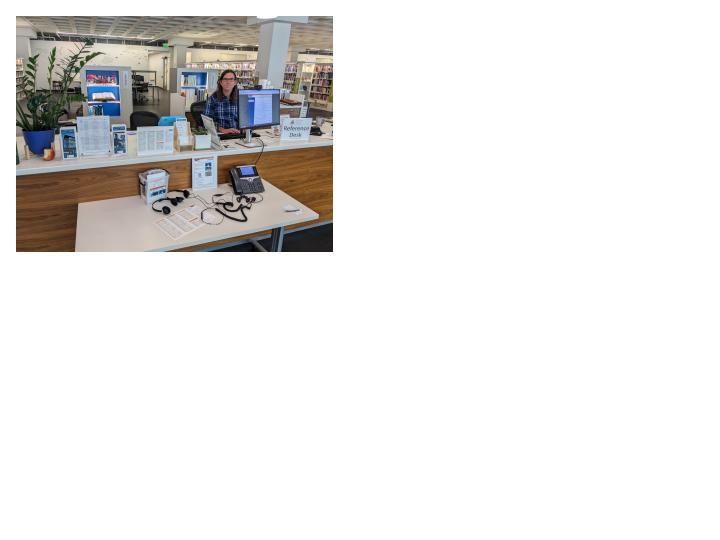
Denver Public Library (DPL) rolled out a Language Access Plan in 2024 to improve equitable access to information, programs, and services for customers who use languages other than English. As part of this work, the library’s Language Access team identified barriers to effectively using on-demand, onsite over-the-phone interpretation, and in response, DPL created “InterpreStations”, dedicated phone interpretation stations in library spaces equipped to support private conversations between staff, customers, and interpreters. By embedding interpretation into everyday library service infrastructure, customers from across Denver can meaningfully access library services in more than 270 languages, from the library location of their choice.
Challenge/Opportunity
This innovation addresses insufficient customer access to over-the-phone (OPI) interpretation secondary to lack of customer awareness, privacy concerns, and staff knowledge of how to use phone interpretation services. Staff survey responses indicated that 23% needed additional equipment to effectively provide customers access to OPI and 92% wanted training on the equipment to better assist customers. Additionally, staff reported that, with only one headset, they often resorted to having calls on speakerphones, creating privacy concerns for customers and a less personable environment for conversation between two individuals. These workarounds made interpreted interactions different from the direct, private conversations available to English-speaking customers. The roll out of dedicated OPI equipment and associated training at 29 access points responds to those concerns, building staff confidence while providing customer privacy and quality interpretation service.
Key Elements of Innovation
The project equipped libraries with new OPI equipment, updated materials and training on how to use the service, and set up dedicated “InterpreStations”, a section of the service area where interpretation service remains visible in each location. Project goals included improving customer access to interpretation via visible, accessible equipment and space, and training staff to support services. Instead of services that were available but out of sight, InterpreStations embed language access into the everyday service environment.
Implementation strategy heavily leveraged staff participation and input. DPL’s Information Technology team served as a core collaborator, evaluating equipment feasibility and installing and maintaining selected equipment. Frontline staff provided ideas, concerns and feedback throughout the project to the Language Access team. These cross-departmental partnerships were critical to designing a solution that could be successfully integrated into library service.
Achieved Outcomes
Successes:
Implemented 29 fully equipped “InterpreStation” access points
Provided OPI training, quick-reference materials, online training materials, and instruction to approximately 410 staff members across the DPL system
Supported a 236% increase in call volume between April–August 2026 compared to the same time period in 2025
Post-implementation Staff Feedback:
48% of respondents confirmed that staff feel confident using OPI independently without requiring immediate further training
10% observed an increase in OPI usage post-installation.
48% of respondents perceived the space as providing meaningful customer access.
Metrics Used:
Output: number of actions taken to promote language assistance services
Efficiency: percentage of public-facing staff that are knowledgeable of language assistance services
Effectiveness: number of language access concerns or complaints received from the public.
Outcome: percentage increase in utilization of language assistance services across DPL