Fiber Mascot Contest: Hired by the Community
Berkeley Public Library
Innovation Synopsis
Berkeley Public Library launched the Fiber Mascot Contest to build a consistent, recognizable social media identity out of otherwise varied programming and content, on a budget of just $1,000, run entirely by what was then a two-person Communications team.
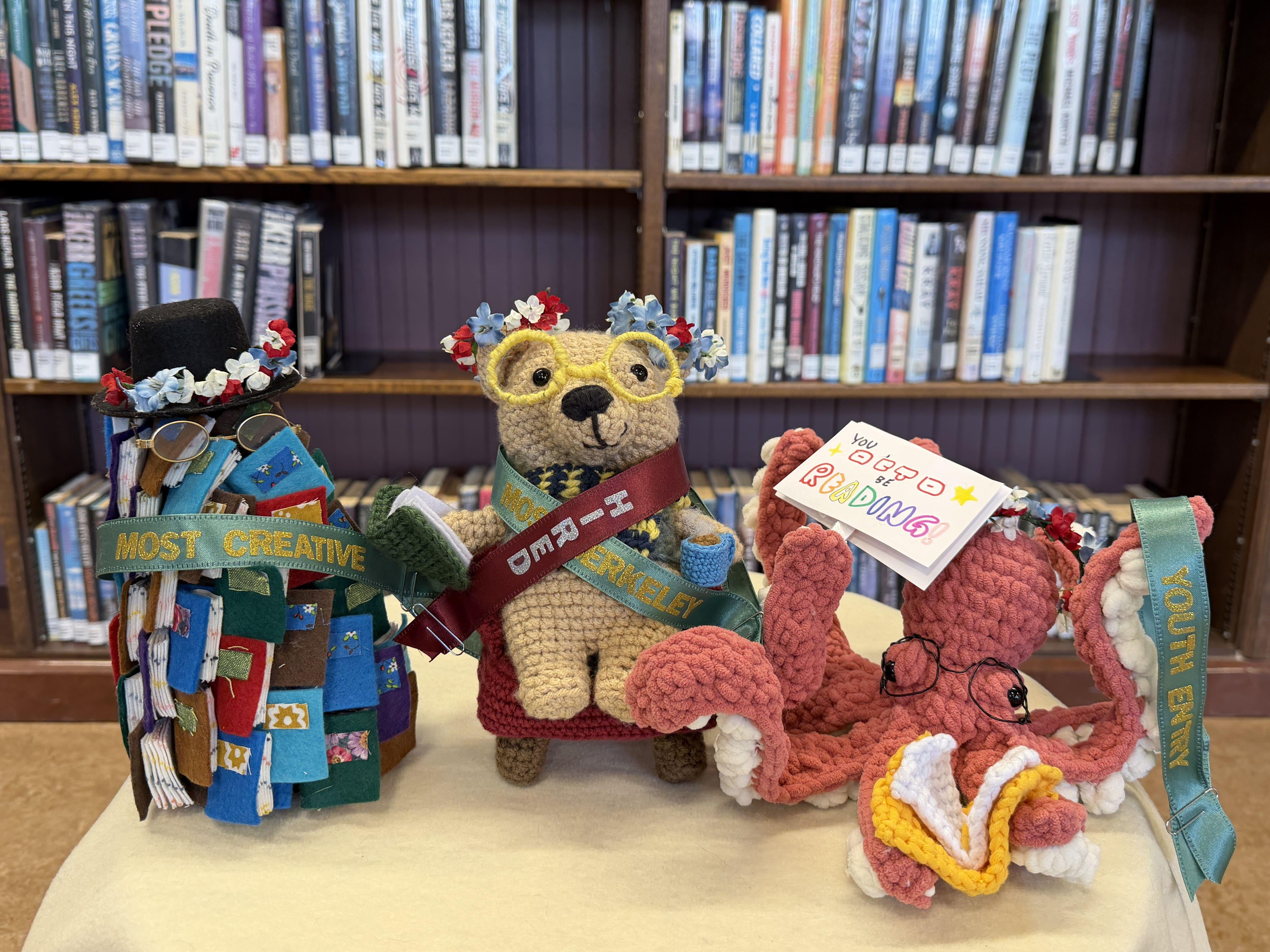
Framed as a mock hiring process, the contest invited community members of all ages to design the library's next social media mascot using any fiber craft, from crochet to felting to sewing. There was no major prize, and winning meant giving up ownership of the mascot to the library entirely; entrants received only a small thank-you gift. Yet 108 handmade creatures arrived across all five branches, some accompanied by cover letters and handwritten backstories, others shipped back to Berkeley by former residents who had since moved away just to take part.
That depth of unpaid, voluntary investment drove the contest's success: sweeping organic social growth, unprompted press coverage, and a new shared sense of identity between the libra
Challenge/Opportunity
The library's social content is produced by many contributors across many programs, including librarians who are subject experts but not social media specialists, leading to inconsistent tone and style post to post.
Choosing a mascot for a public institution raised deeper equity questions too:
• How do you pick something that makes everyone feel represented, heard, and included, regardless of age, background, or skill?
• If a single artist designed it, would that vision still reflect a community as diverse as Berkeley's, one that keeps evolving?
With new formal branding still in progress, the library needed an identity that felt authentically shared, not assigned. A contest judged by the community itself let that identity be built collectively and inclusively, by the people it was meant to represent.
Key Elements of Innovation
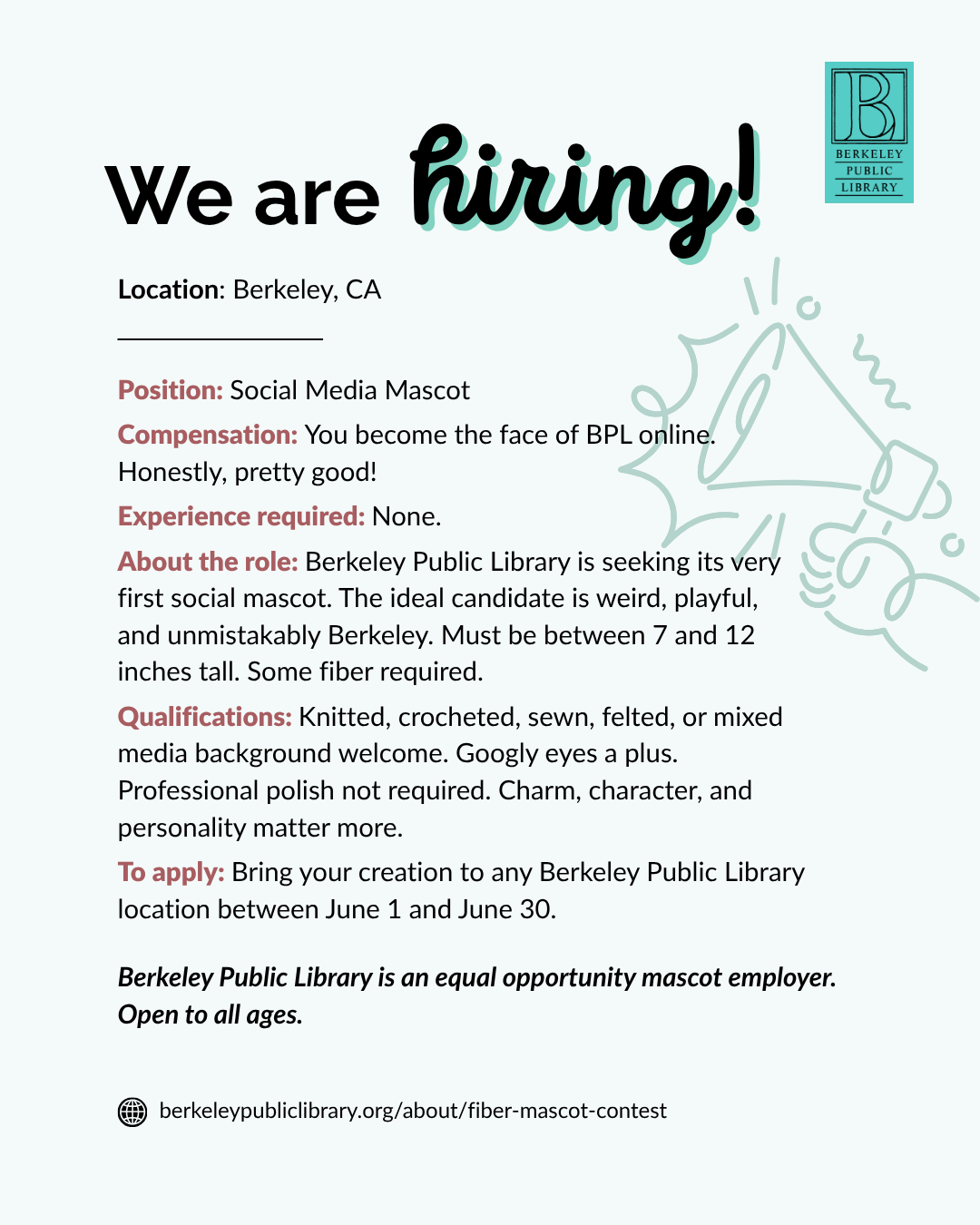
Berkeley Public Library invited the community to design its next social media mascot, framed as a mock hiring process anchored by a "job listing." Many entrants embraced the bit fully and, unprompted, submitted cover letters and backstories of their own.
Key elements:
• Fiber was chosen for its low barrier to entry and because the library's own maker and fiber programs are among its best-attended; the definition was kept loose (crochet, knit, sew, felt, mixed media) so any age or skill level could join.
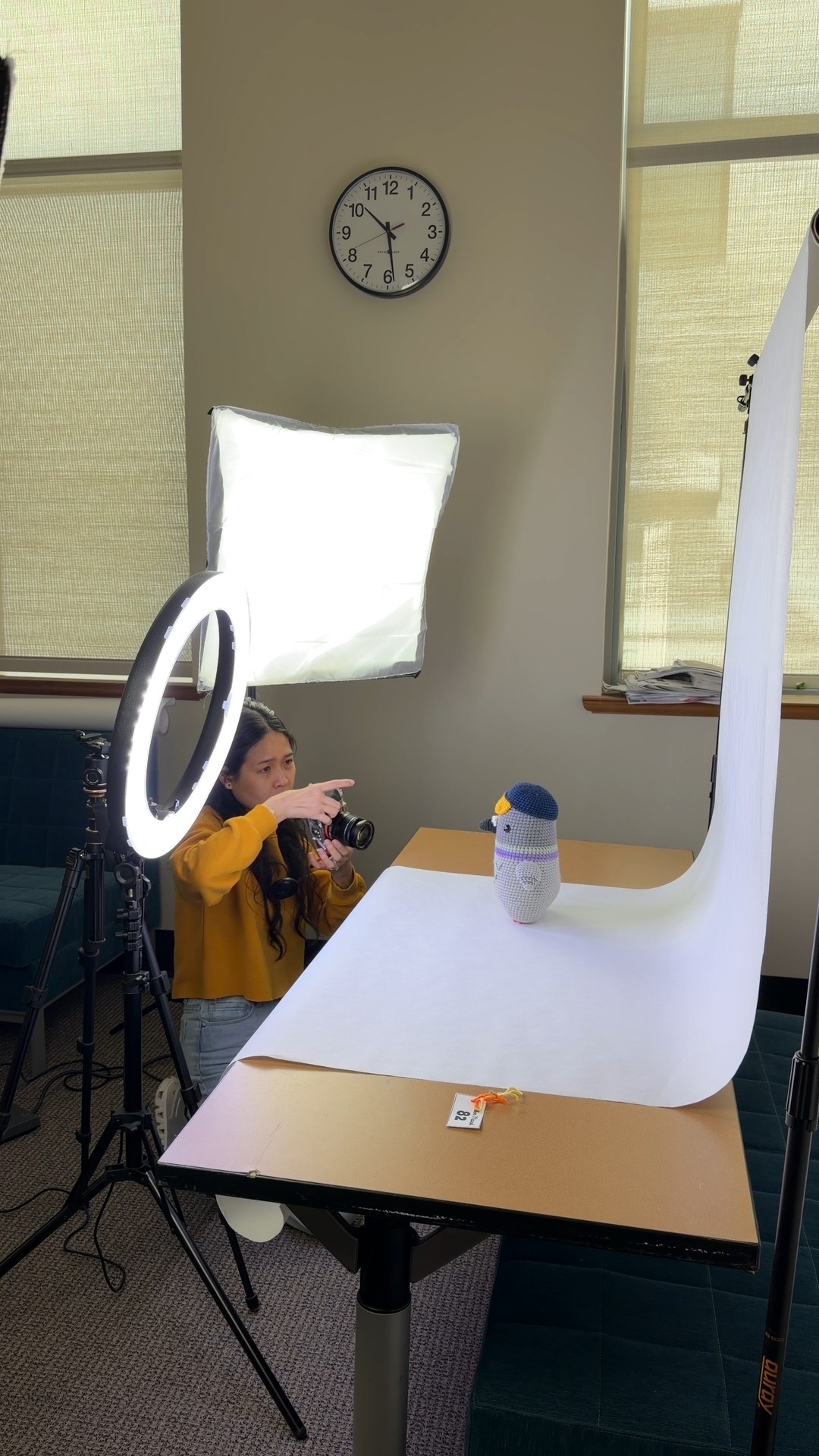
• Every entry received a professional "photoshoot" for the contestant gallery.
• No major prize; entrants received a small thank-you gift, funded by a $1,000 Berkeley Public Library Foundation grant, with bookstore vouchers from the Friends of Berkeley Public Library.
• The library's website couldn't support a gallery-style layout, so the Communications team built a custom site on GitHub Pages instead, handling all branding, photography, and video in house.
Achieved Outcomes
Community outcomes: brand awareness and sentiment improved sharply. 108 mascots, 1,359 votes; Best Youth winner was a 10-year-old crocheter. Organic growth, June vs. May: impressions +129.9%, engagement +280.8%, video views +1,822.9%. One video hit nearly 280,000 views. Earned unprompted coverage from Berkeleyside and The Daily Californian, plus reshares from local organizations and accounts, with no media outreach.
Staff outcomes: this project only worked because staff across all five branches pitched in well beyond their regular roles, handling everything from patron questions to submission logistics to appearing on camera. It proved a small, community-centered investment can build real pride, not just metrics: "Every time a new mascot was brought up to the desk it made my day."
Partner outcomes: the Foundation, whose grant funded it, gained a proven success story for future asks. The Friends, whose president appeared on camera, saw more visibility and volunteer interest.
Supporting Materials: