Digital Literacy for Adults With Disabilities
Baltimore County Public Library
Innovation Synopsis
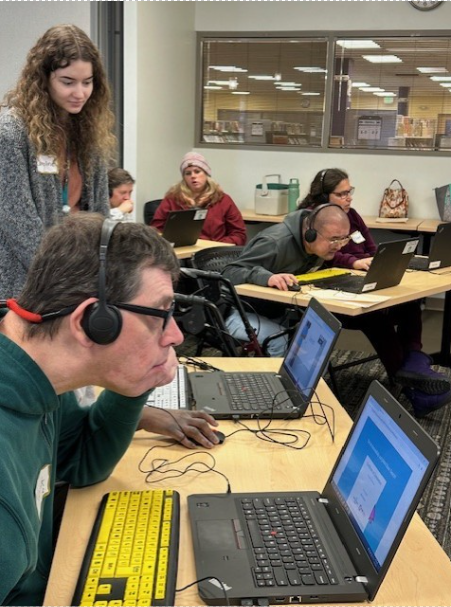
Rather than asking adults with intellectual and developmental disabilities (IDD) to adapt to traditional technology classes, Baltimore County Public Library redesigned digital literacy instruction around their learning and support needs, creating a model for more inclusive technology education. The four-week series introduced IDD customers to computer basics, the internet, email, social media and online safety. The programs offer hands-on practice using standard and adaptive technology, and the participants leave with resources to continue practicing on their own.
Challenge/Opportunity
Digital literacy is a necessity, not a privilege, yet traditional technology instruction is not always designed to meet the learning and support needs of adults with (IDD). Barriers can include large class sizes, fast-paced instruction, distracting environments and limited access to adaptive technology or individualized support. Baltimore County Public Library recognized an opportunity to address this gap by creating an accessible, supportive learning environment where adults with IDD can build practical digital skills and greater independence.
Key Elements of Innovation
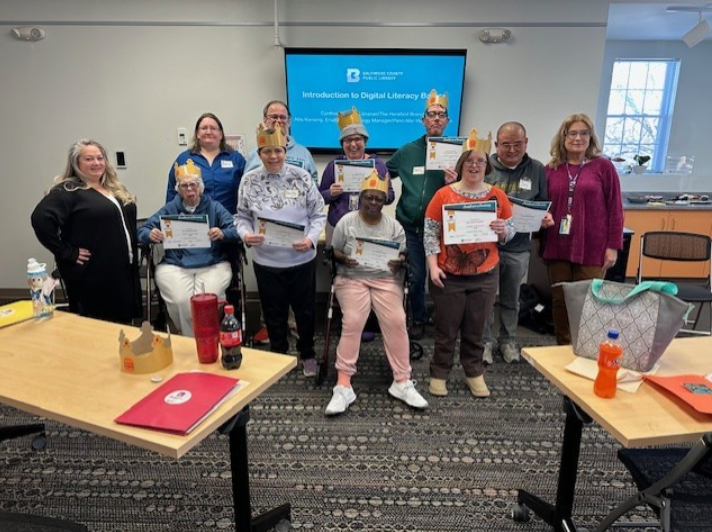
Digital Literacy for Everyday Life programs remove barriers to technology education for adults with IDD. Working with partners, including Penn-Mar Human Services, the library developed four 60-minute classes combining instruction and hands-on practice in computers, internet use, email and social media. Direct support professionals (DSPs) participate alongside learners, reinforcing skills beyond the classroom and supporting continued practice. Launched in 2025 for cohorts of eight participants and their DSPs, the series uses small-group instruction to provide individualized support. Feedback from three cohorts informed a streamlined 90-minute model piloted in 2026. The program has since expanded to two additional branches, creating a scalable model for inclusive digital literacy instruction.
Achieved Outcomes
The program demonstrated success through full enrollment, participant growth and continued investment, with our partner Penn-Mar Human Services receiving a $20,000 grant to expand the program. Although intentionally limited to eight participants per cohort, each reached capacity. Participants gained confidence using technology and a greater sense of independence as they practiced skills applicable to everyday life. The grant supports two 12-week courses beginning in October, expanding the introductory series into more extensive instruction and practice. This pilot also led two additional branches to offer similar programming for their IDD communities. Ongoing measures include registration, attendance, participant feedback and partner engagement.