Creating Culturally Meaningful Play Spaces
Dakota County Library
Innovation Synopsis
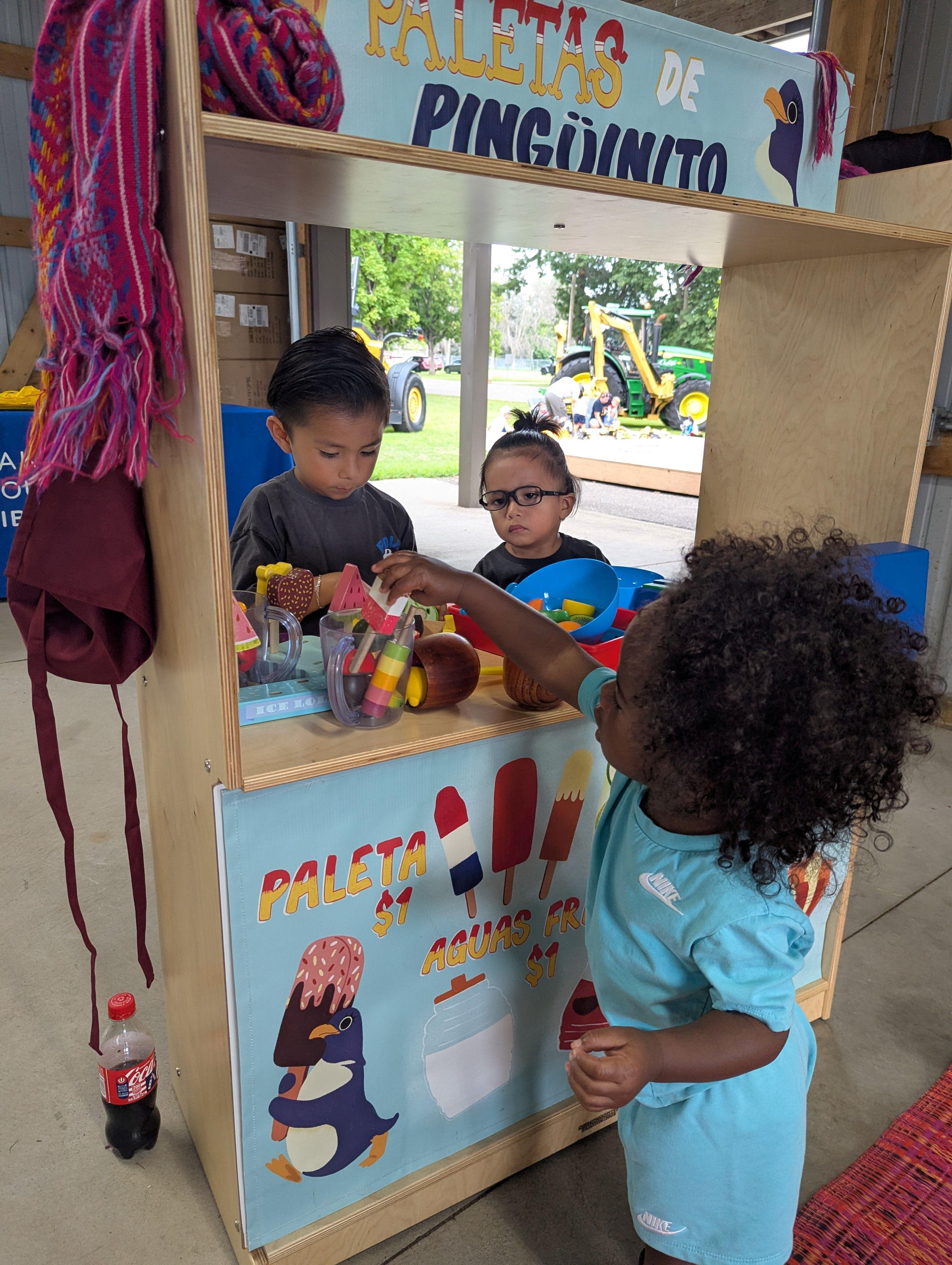
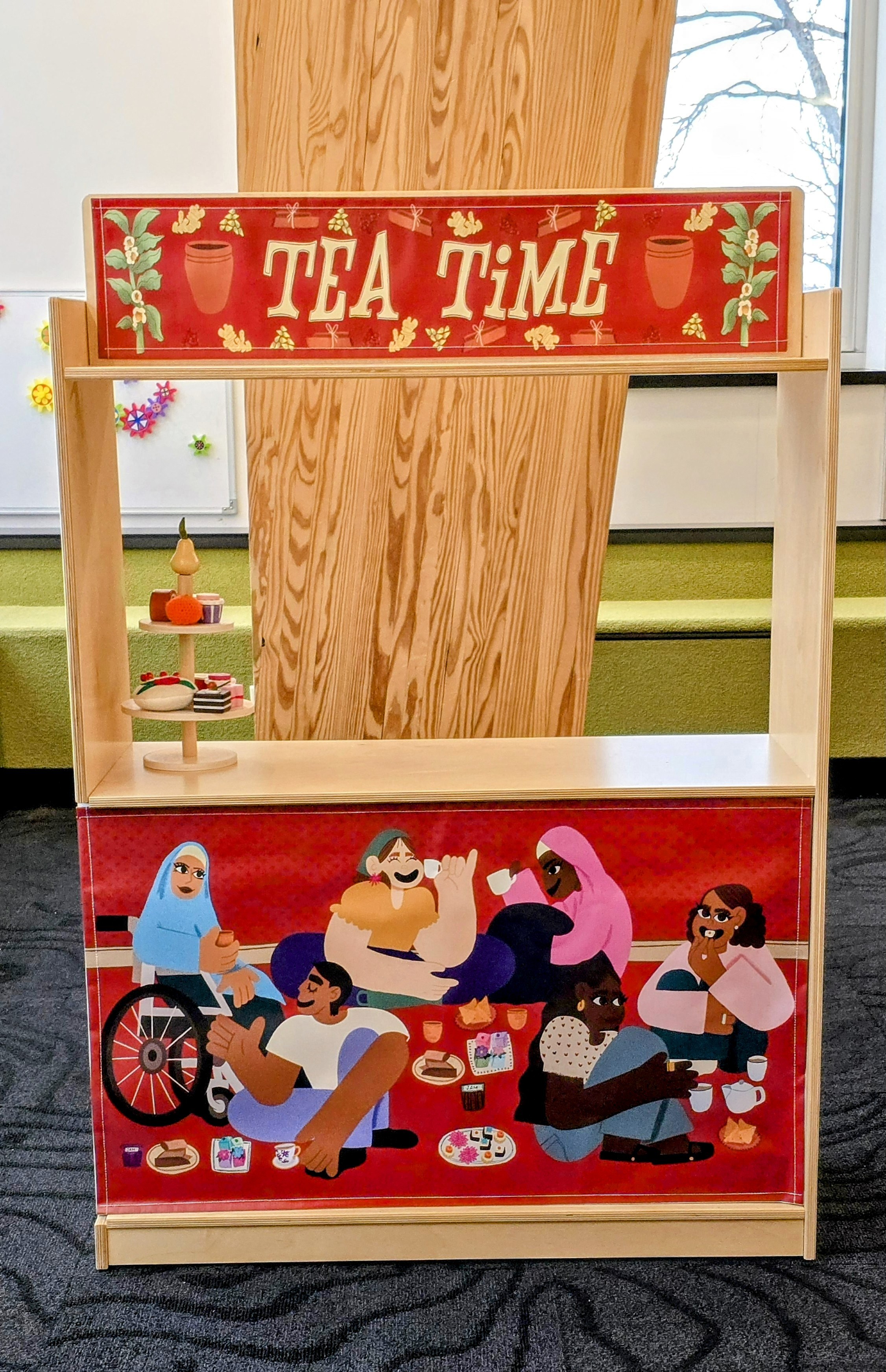
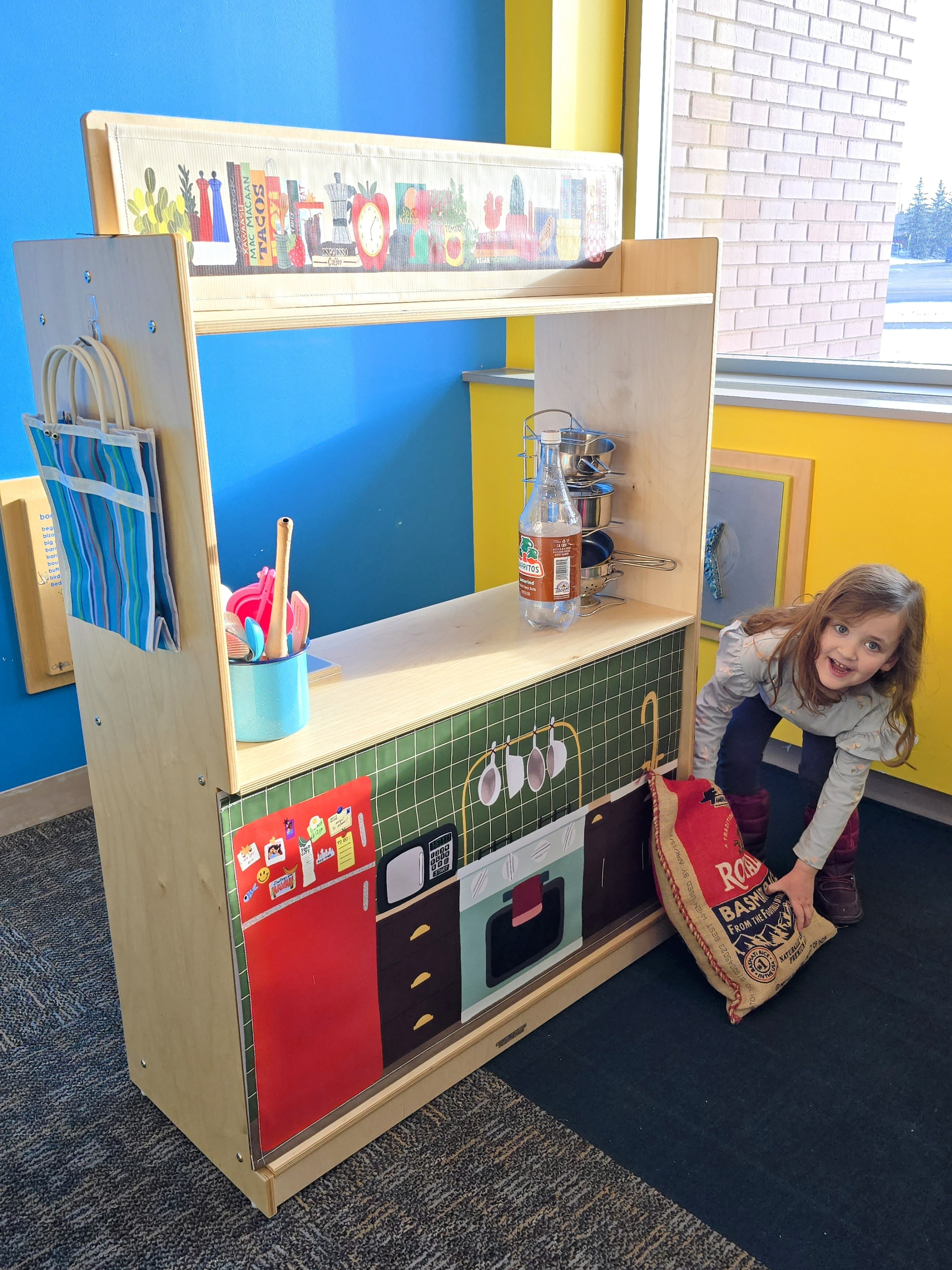
Dakota County Library reimagined play spaces through the lens of equity, culture, and building relationships. The multifaceted Somali, Hispanic, and Asian Indian communities in Dakota County have valued traditions, knowledge and practices but also face cultural, linguistic, racial and economic barriers. In addition, families live in dual cultures, which can create gaps between parents and children. The library co-created collections of culturally inclusive toys and stations reflecting the community for early literacy play spaces, with trusted Somali, Spanish and Indian Bengali community members. All play area art was created by a local Latinx artist. Place spaces rotate quarterly and were also featured in the library booth as the Dakota County Fair. The play spaces affirm identity and culture, build community among families, and strengthen connections to the library. Feedback from children and caregivers provide a valued information loop for continuous improvement.
Challenge/Opportunity
Dakota County is growing and diversifying. Two-thirds of students enrolled in the Burnsville-Eagan-Savage school district are students of color, and 15% of students speak Somali. The U.S. Census Bureau reports 19.8% of Burnsville residents speak a non-English language, 10% identify as Hispanic, and 14.3% are born outside the U.S. In West St. Paul, 20.9% of residents identify as Hispanic and 14.6% speak a non-English language. While linguistic, ethic, and cultural groups may be concentrated in certain cities, Dakota County has seen growing diversity throughout the county.
The Somali, Hispanic, and Asian Indian communities are culturally different but share the experience of living in dual cultures. Families often experience a gap between children and parents as they navigate dual cultures. Immigrant and refugee communities also face cultural, linguistic, racial, and economic barriers. Residents have shared with the library the desire for ways to connect youth to their culture.
Key Elements of Innovation
The library consulted with three trusted, knowledgeable, and connected Somali, Asian Indian, and Hispanic community members on how best to enhance library play spaces as sites of connection. Key outcomes include creating a sense of belonging, affirming the cultures found in our community, and meaningful learning experiences. Consultants conducted community input sessions, recommended play items and made connections with community vendors. All materials selected were a joint effort between the consultants and Youth Services Librarians to ensure cultural significance and literacy-building utility. Thoughtful toy and activity selection can remove the barrier of there being a “right” way to play and learn together with one’s children – particularly by those new to the language, new to the area, new to the library – and instead create a space that shows culture and language as assets, supports child-led collective play, and opportunities for children and caregivers to feel belonging.
Achieved Outcomes
The library’s approach to evaluation is to build trusting relationships with community members and listen and learn rather than guess what a multifaceted community might want or need. Working with consultants from the community, our team assembled play scenarios built to encourage imaginative play using culturally recognizable elements that continue to rotate among our branches. We have implemented a layered feedback loop for the play areas, including library staff observation, conversations with participants and caregivers, and a kiosk-style digital form for caregivers. The digital form includes questions about participant’s ages, frequency of use, and specific skill development observed. This feedback will help to further develop the play spaces to achieve positive play goals. Through this process, we also hear issues that are barriers to library participation in general. We continue to gather feedback to prompt reflection and to inform regular library programming and spaces.