Building Digital Resilience through AI Literacy
Indianapolis Public Library
Innovation Synopsis
The Indianapolis Public Library created Artificial Intelligence (AI) education programs led by a team of Tech Learning Specialists and the Supervisor, Digital Inclusion. Through accessible classes that provide history, context, and real-world examples, residents learn how Artificial Intelligence affects their daily lives and how to evaluate and use these tools responsibly and ethically. These programs build digital resiliency by helping community members develop the skills to understand, question, and thoughtfully engage with emerging technologies as they become part of everyday life.
Challenge/Opportunity
Recognizing that Artificial Intelligence can feel overwhelming, the program focused on building digital resiliency by preparing participants for ongoing technological change.
AI was introduced through two classes:
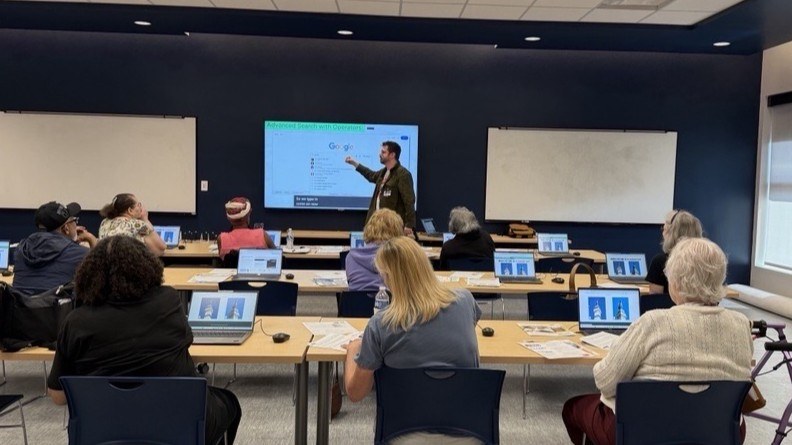
• How Do I Know What’s Real? How to Search, Sift, and Verify Information in the Age of AI
• Discover Artificial Intelligence
These classes raised awareness of AI tools and their capabilities while helping patrons understand how AI already shapes their daily digital experience. A 73-year-old participant at the Irvington branch was surprised by AI's impact, noting, “[I] didn't know a lot, but I now recognize how I have been using it behind the scenes.”
In addition to practical skills, the classes provided space to discuss societal impact. Discover AI covers AI's history and ethics, while How Do I Know What's Real? explores the media, headlines, and public conversations shaping perceptions of AI.
Key Elements of Innovation
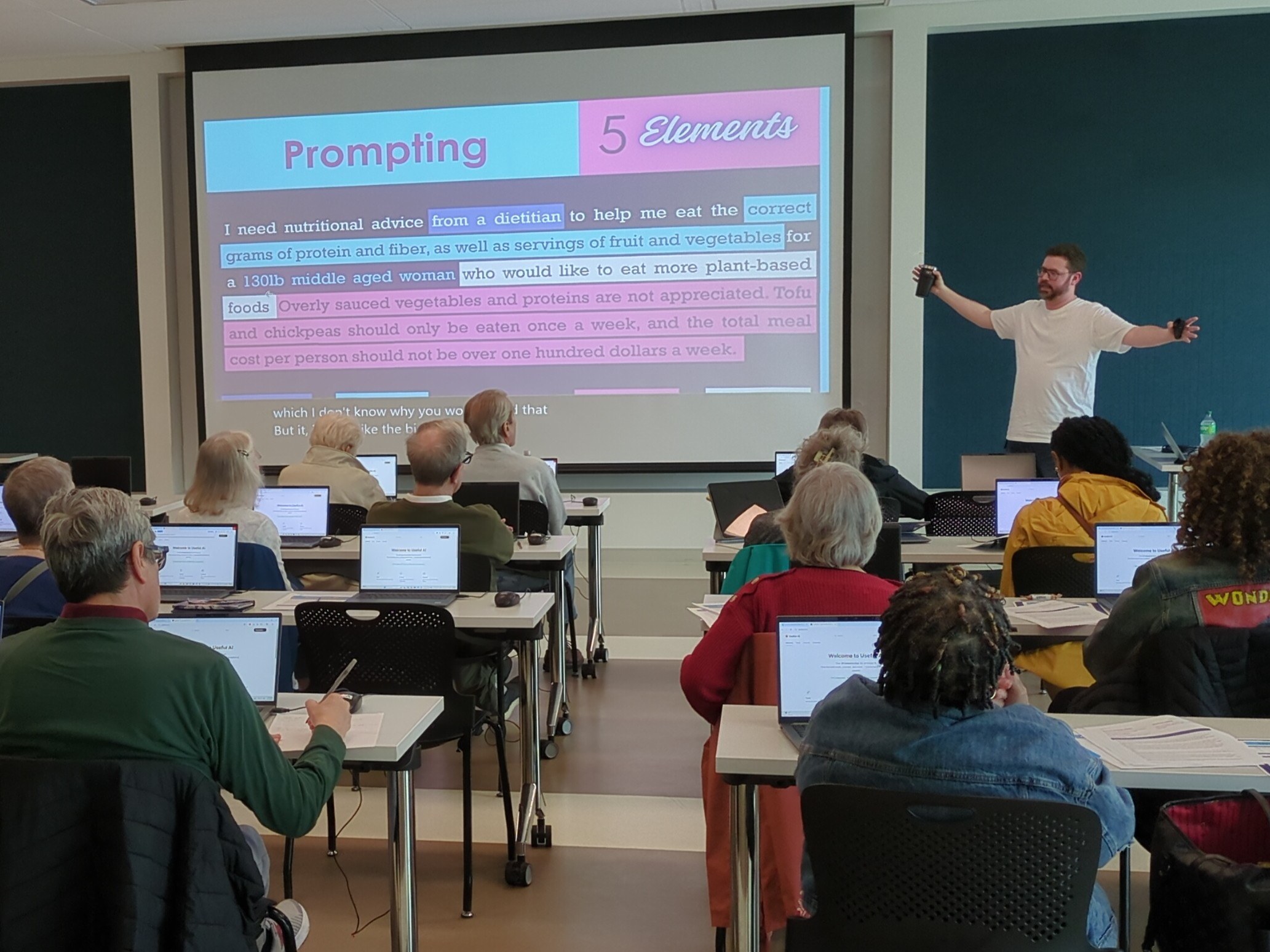
Participants learned practical strategies for responsible AI use, media literacy, and effective use of generative AI. To support hands-on learning, most sessions were limited to fewer than 10 participants, allowing ample opportunity to experiment with AI tools and examine real-world examples.
Discover AI was designed to foster digital resiliency through guided independent exploration. Participants could choose activities aligned with their interests and potential applications of AI in their daily lives, creating a safe environment for experimentation with instructor support. This approach exposed participants to a broad range of emerging AI tools and use cases while encouraging confidence and self-directed learning. One participant noted, “The breadth of information was awesome! Knowing where AI started and the basics of how it works was very helpful.”
Programs were offered at 16 of the library’s 25 branches and two community partner locations serving seniors.
Achieved Outcomes
The classes reached 198 patrons through 27 sessions. Program evaluations were completed by 97% of attendees, providing strong insight into participant experiences and learning outcomes. Results showed that 92% of respondents agreed they could apply the knowledge gained during the program, demonstrating the practical value of the content and its relevance to their daily lives. Additionally, 82% of respondents reported learning about library resources and services, reinforcing the library's role as a trusted source of information and support as community members navigate emerging technologies.
Feedback from participants reinforced the value of the hands-on approach. A 52-year-old participant at the Nora branch shared, “I had never used any AI tools before the class. I had heard of them but wasn't sure how to get started. I really enjoyed the hands-on experience to explore the tools and how I can use them.”