Building Connections in EPL’s Teaching Kitchen
Edmonton Public Library
Innovation Synopsis
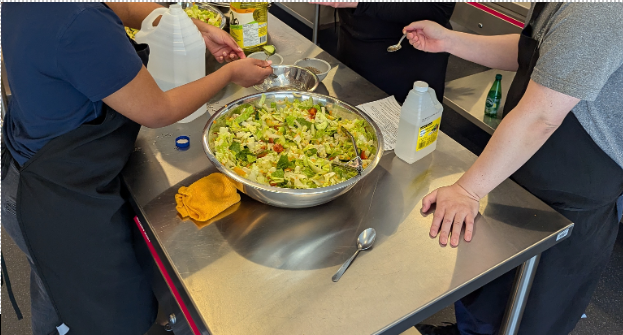
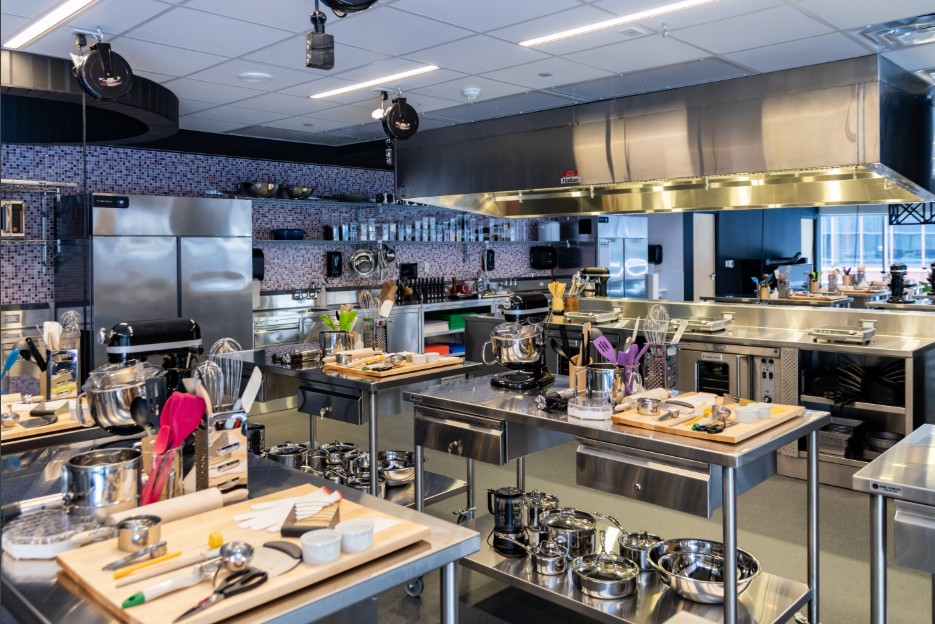
Located in Stanley A. Milner Library, the Kitchen has become a shared space for inclusion, skill-building, and community connection through a partnership with five organizations: Chrysalis, Multicultural Health Brokers, Selections Career Support Services, Gateway Association, and The Pride Centre.) These community organizations serve diverse populations, including people with disabilities, cultural minority communities, employment barriers, and diverse sexual orientations and gender identities. This program brings their clients together for hands-on cooking experiences in EPL’s fully equipped commercial teaching Kitchen at no cost. This results an accessible environment where marginalized community members can build practical skills, confidence, and social connections.
Challenge/Opportunity
Many people experiencing disability, cultural or social marginalization, or barriers to employment face limited access to:
- Affordable opportunities to develop practical life and employment skills.
- Safe, welcoming spaces where they can build social connections and a sense of belonging.
- Experiences that strengthen confidence, independence, and healthy living.
- Opportunities to explore interests that could lead to employment.
Key Elements of Innovation
In meetings with these organizations to assess their needs, the Library recognized an opportunity to act as a conduit for social connection. After all, food has a unique power to bring people together. The Kitchen itself became a gathering point, bringing together a diverse group of people who may not have otherwise crossed paths, in a welcoming environment that met their shared needs.
Five-way partnership: Organizations serving diverse communities take turns leading or co-hosting sessions
Community Connections: Partners bring their clients to The Kitchen in groups of organizations allowing community building within and across groups.
Hands-on learning: Participants develop basic cooking, food preparation, budgeting, and nutrition skills.
Pathways to opportunity: Participants can explore whether culinary environmentsinterest them as potential employment.
Belonging by design: A community space where people from different marginalized communities learn and socialize together
Achieved Outcomes
Over 14 months we have held 17 sessions with a total of 347 participants. We gathered feedback from our collaborators and from EPL staff. Positive impacts of these programs include:
Employment – participants gained tangible experience that led to employment.
Participants reported gaining employment in culinary environments.
Participants reported promotions (dishwasher to prep cook and line cook positions).
Provision of low-stakes environment to practice required in kitchen environments, working under time pressure, confidence, teamwork, communication, and basic kitchen skills.
Life Skills – acquisition of basic kitchen and cooking skills.
Had never used knives or stoves before, and learned.
Learned to use stand mixers, ovens, stoves, and the industrial dishwasher
Following multi-step instructions, problem-solving, communication
Social Connections Created
Created a rare shared space where people who on the surface have nothing in common, keep coming back month after